
What's Happening?
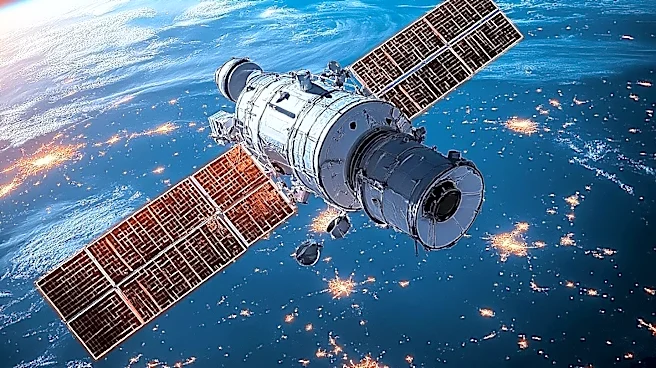
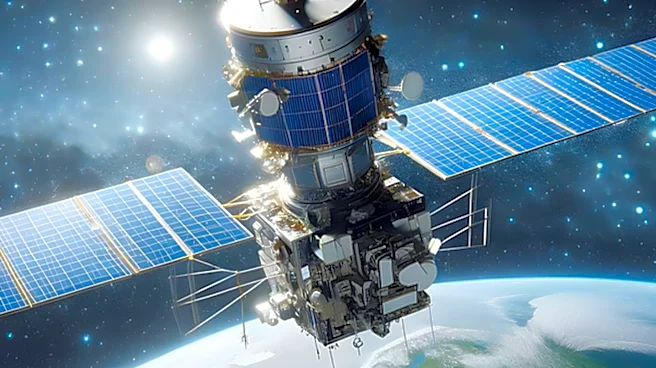
Vodafone and AST SpaceMobile have activated an 'Earth-space station' in Málaga, Spain, marking Europe's first facility dedicated to the research and development of integrated terrestrial and low Earth orbit
networks. Field testing is already underway in Granada. The primary objective of this station is to validate direct-to-device smartphone broadband and applications, particularly for areas with limited or no mobile coverage. The Málaga Satellite Centre, established in collaboration with the University of Málaga and its Mobile & Aerospace Networks Lab, is supported by an initial grant from the Spanish Space Agency. This initiative aims to improve the resilience and ubiquity of mobile coverage, which is considered vital for economic and social importance in the EU.
Why It's Important?
This 'Earth-space station' is a critical step in advancing satellite-to-phone technology, which has significant implications for global connectivity. By focusing on the integration of terrestrial and low Earth orbit networks, Vodafone and AST SpaceMobile are addressing the challenge of providing seamless mobile service in remote or underserved regions. The research conducted at this facility, including traffic orchestration and emergency communications testing, will be crucial for developing robust and reliable hybrid networks. The ability to maintain connections for smartphone users and emergency responders moving between terrestrial and satellite coverage could enhance public safety and disaster response capabilities. This collaboration also highlights the growing importance of international partnerships in developing advanced telecommunications infrastructure.
What's Next?
Field tests in Granada are currently capturing network traffic, including video, data, and call logs, exchanged between AST SpaceMobile satellites, the Málaga gateway, and the terrestrial network. The center will also support operations involving autonomous robots for inspecting remote or hazardous sites and will test device chipsets and software to improve performance and battery life across both network types. Planned emergency communications tests will examine interoperability between terrestrial and non-terrestrial networks, including simulations where ground-based networks are shut down to test automatic satellite channel reselection. This research will directly inform the development and deployment of Satellite Connect Europe, the wholesale joint venture between Vodafone and AST SpaceMobile.
Beyond the Headlines
The establishment of this research facility signifies a broader shift towards a more interconnected global communication infrastructure, where space-based assets play an increasingly integral role. Beyond commercial applications, the focus on emergency communications underscores the potential for satellite-to-device technology to provide critical lifelines during natural disasters or other crises, enhancing societal resilience. The collaboration between a major telecommunications provider like Vodafone, a satellite technology innovator like AST SpaceMobile, and academic institutions like the University of Málaga, supported by government grants, illustrates a multi-stakeholder approach to solving complex technological challenges. This model could serve as a blueprint for future international collaborations aimed at expanding access to essential services and fostering technological innovation.