

What's Happening?
Eureka Ergonomic has unveiled the Mathias Collection, a new line of executive seating designed to blend furniture-inspired craftsmanship with integrated ergonomic performance. The collection features a distinctive curved wood back, layered wood construction,
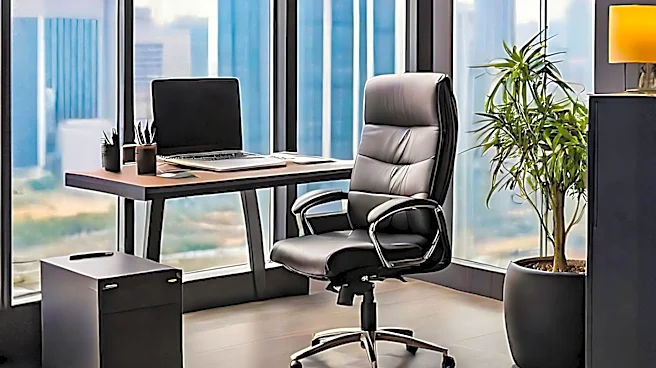
and options for leather or fabric upholstery. It is engineered to adapt to various work environments, including formal executive offices, private offices, and home workspaces, acknowledging the increasingly fluid nature of modern work that encompasses focused tasks, reading, meetings, and downtime within the same space. The Mathias Collection prioritizes integrating support, comfort, and adjustment directly into the chair's structure, rather than treating functionality as a separate add-on. The design emphasizes the relationship between proportion, material, and structure, using FSC®-certified wood and premium materials like Napa leather to create a refined aesthetic. The collection offers Standard, XL, and Pro versions to accommodate different body sizes, seating preferences, and usage patterns, along with complementary products like the Mathias Soft Pad Ottoman.
Why It's Important?
The introduction of the Mathias Collection by Eureka Ergonomic is significant as it addresses the evolving demands of contemporary work environments, particularly the rise of hybrid work models and the blurring lines between professional and personal spaces. By offering executive seating that is both aesthetically sophisticated and highly ergonomic, the collection caters to business leaders and professionals who value the quality of their working environment and long-term comfort. The emphasis on integrated ergonomics and adaptable design reflects a broader industry trend towards furniture that supports diverse activities beyond traditional desk work, such as reading and relaxation. This approach can enhance user well-being and productivity, potentially reducing the physical strain associated with prolonged sitting. For the furniture industry, it signals a move towards more holistic design philosophies that consider both functional performance and visual integration within varied architectural and interior contexts, impacting market trends and consumer expectations for high-end office furnishings.
What's Next?
The Mathias Collection is already gaining traction, with the Mathias Executive Office Chair having sold over 8,000 units, indicating continued demand. Eureka Ergonomic is likely to continue promoting the collection across various channels, highlighting its versatility for executive offices, home workspaces, and lounge areas. The availability of different versions (Standard, XL, Pro) and material options (leather, fabric) suggests ongoing efforts to cater to a wide range of individual needs and aesthetic preferences. The company may also explore expanding the collection with additional complementary pieces or variations to further solidify its presence in the premium office furniture market. As hybrid work models become more entrenched, the demand for adaptable and high-quality furniture that seamlessly transitions between different settings is expected to grow, positioning the Mathias Collection to capture a significant share of this evolving market segment.
Beyond the Headlines
The design philosophy behind the Mathias Collection, which integrates ergonomics and aesthetics, reflects a deeper cultural shift in how we perceive and value our workspaces. It moves beyond the purely utilitarian view of office furniture to one that recognizes the psychological and emotional impact of our physical environment on productivity and well-being. The use of FSC®-certified wood also highlights a growing consumer and corporate demand for sustainable and ethically sourced products, indicating a broader trend towards environmental responsibility in manufacturing. This collection's ability to transition from formal office settings to more relaxed home environments underscores the increasing importance of creating spaces that support a holistic lifestyle, where work and personal life are intertwined. This could influence future architectural and interior design trends, promoting more flexible, comfortable, and aesthetically pleasing spaces that cater to the diverse needs of modern professionals.