


What's Happening?
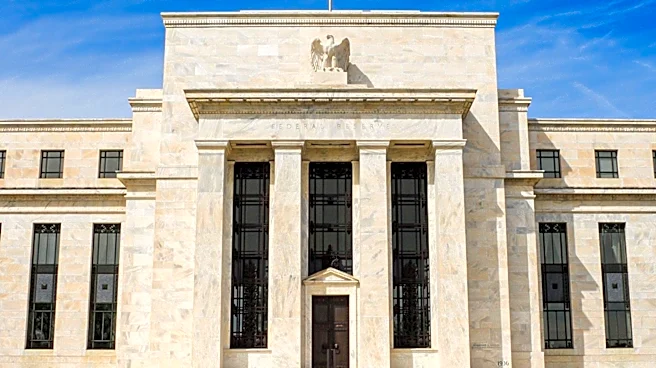
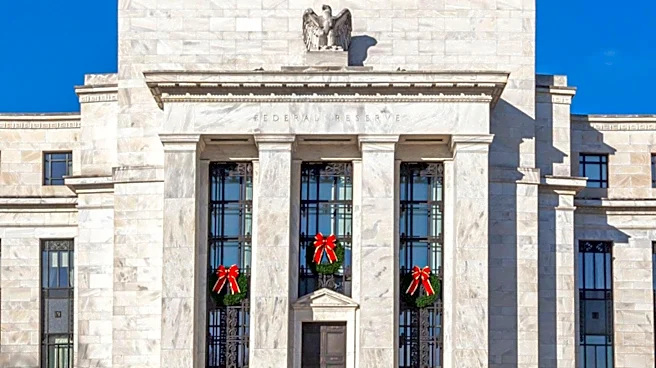
The Federal Reserve is widely anticipated to raise interest rates at its December 9 meeting. CME FedWatch data indicates an 86.8% probability of a 25-basis-point hike, setting the federal funds target range to 4%-4.25%, and a 13.2% probability of a 50-basis-point
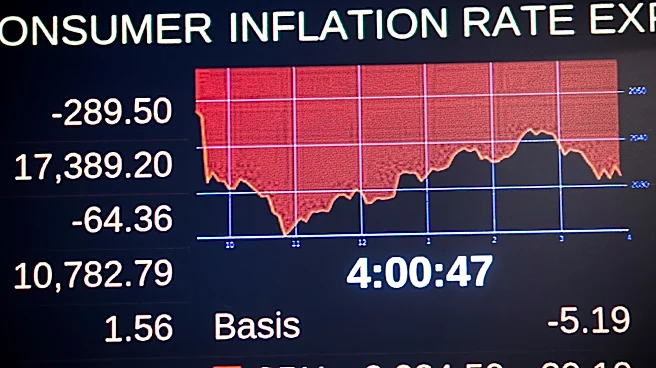
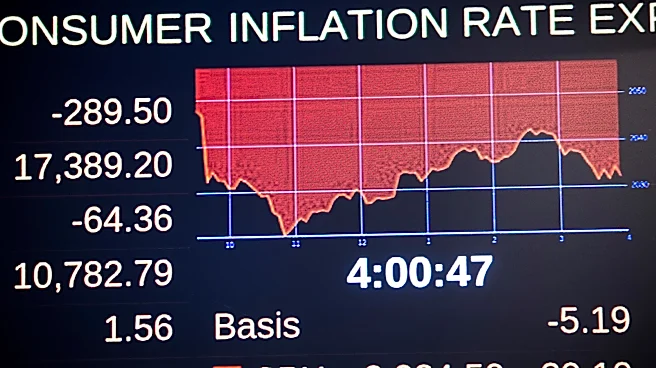
increase. Historically, the stock market's reaction to Fed rate hikes has been varied. For instance, a 25-basis-point hike in December 2015 saw the S&P 500 gain 1.45%, while a similar hike in December 2018 led to a 1.54% decline. The market's response is often more influenced by the Fed's signals about future rate decisions than the immediate hike itself. Federal Reserve officials projected a median interest rate of approximately 4.1% at the end of both 2026 and 2027 in September 2026, and new projections in December will be crucial.
Why It's Important?
The Federal Reserve's interest rate decisions are critical for the U.S. economy and financial markets. Higher interest rates increase borrowing costs for companies, potentially reducing their profitability and making future earnings less attractive to investors. This can lead to downward pressure on stock prices, particularly for companies with high valuations or significant debt. For the broader economy, increased borrowing costs can slow down investment and consumer spending. However, the U.S. economy has shown resilience, with a 3.4% annualized GDP growth in the third quarter and 165,000 jobs added in October 2026. This economic strength provides the Fed with flexibility to continue its tightening cycle to combat inflation. The impact on different sectors and companies will vary, with those having strong cash flow and reasonable valuations potentially better positioned to withstand further rate increases.
What's Next?
The upcoming December Federal Reserve meeting will be closely scrutinized for both the rate hike decision and the accompanying forward guidance. A widely expected 25-basis-point hike might have a limited immediate impact on stocks, but a surprise 50-basis-point increase or signals of more aggressive tightening in 2027 could trigger significant market volatility. Investors will be particularly attentive to the updated economic projections and the tone of the Fed chair's press conference. These signals will help shape expectations for future interest rate trajectories and their potential effects on Treasury yields and stock prices. Long-term investors are generally advised to maintain diversified portfolios and focus on the financial health of companies rather than attempting to predict short-term market reactions to Fed announcements, as historical data shows that immediate market responses do not always dictate long-term performance.
Beyond the Headlines
The Federal Reserve's ongoing tightening cycle reflects a strategic effort to normalize monetary policy after an extended period of low interest rates. This shift has broader implications for capital allocation and risk assessment across financial markets. The 'pre-FOMC drift,' a historical tendency for U.S. stocks to rise before Fed announcements, has largely disappeared since 2016, indicating a more efficient market that prices in expectations. However, the period after the 2 p.m. statement still sees significant market movement, suggesting that the Fed's communication and future outlook remain powerful drivers. This environment challenges traditional investment strategies and emphasizes the importance of understanding the nuances of monetary policy. The long-term impact could include a re-evaluation of growth-oriented investments and a greater focus on companies with robust fundamentals that can withstand higher capital costs.