





What's Happening?
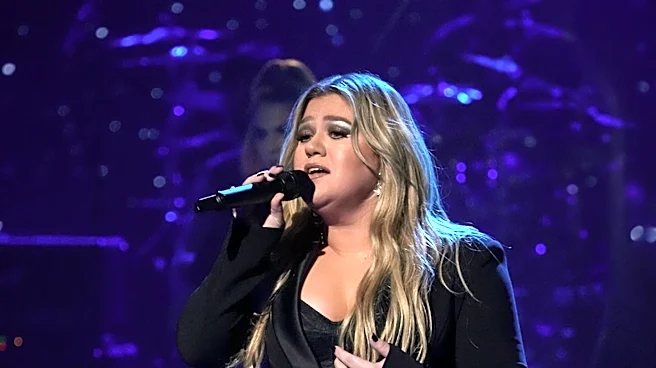
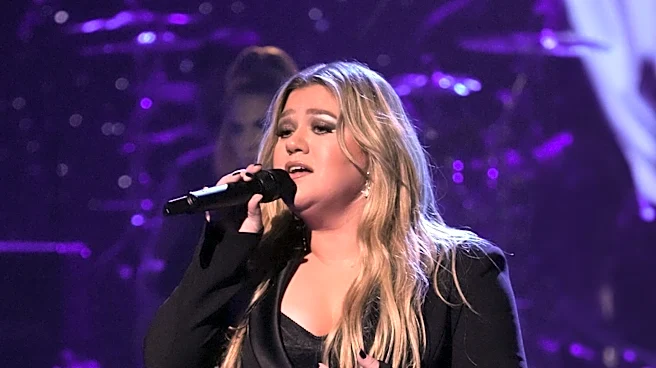
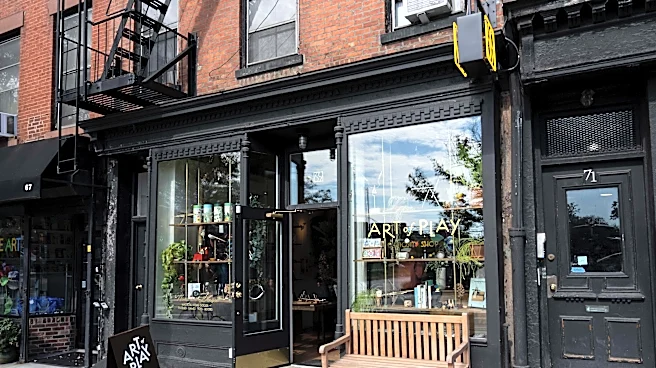
Security footage has been released concerning an alleged incident involving Kelly Clarkson at the Brooklyn store, Art of Play. The incident, which occurred on April 13, 2019, sparked a public dispute after Clarkson posted on social media platform X, claiming
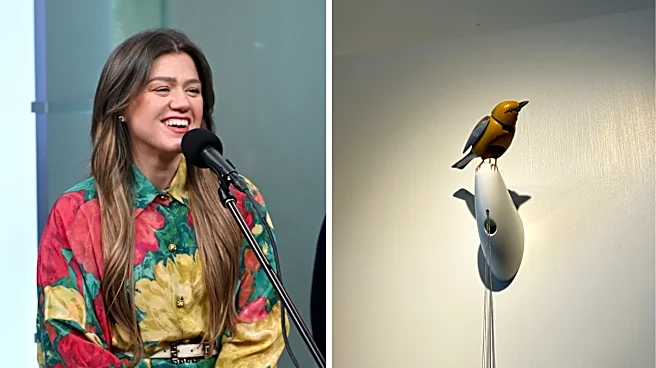
she was treated rudely by store staff, similar to a scene from 'Pretty Woman.' She alleged that staff judged her and refused to sell her a mechanical bird named Molly, despite it having a price tag. Art of Play, however, stated that the item was not for sale and that Clarkson left abruptly after being offered an alternative. The 'Pablo Torre Finds Out' podcast obtained and released the security footage, which shows Clarkson in the store with two children for approximately five minutes. The video, which lacks audio, depicts Clarkson interacting with a man identified as one of the store's owners, pointing at the mechanical bird. She then moves to another part of the store, seemingly not noticing the shopkeeper pointing to a different item. The footage concludes with Clarkson at the exit, appearing to speak with a worker behind the cash register with some gesticulation, before she departs. The store owner, Adam Rubin, described the situation as an 'insane misunderstanding' and expressed concern over threats received by his staff after Clarkson's public comments.
Why It's Important?
This incident highlights the significant impact of celebrity social media presence on small businesses and public perception. Kelly Clarkson's initial post on X, leveraging her substantial platform, quickly escalated a private retail interaction into a widely discussed public controversy. This demonstrates the power of social media to shape narratives and influence public opinion, often without the full context of an event. For Art of Play, a small business, the public accusation led to negative attention and even threats against staff, illustrating the vulnerability of local enterprises to online backlash. The release of the security footage, while providing visual context, still lacks audio, leaving room for continued speculation and differing interpretations of the events. This situation underscores the challenges in resolving disputes when key information is missing and public sentiment is already swayed. Furthermore, the store owner's decision to humorously increase the price of the mechanical bird to $15 million 'due to popular demand' reflects an attempt to reclaim control of the narrative and mitigate the negative publicity through satire.
What's Next?
The release of the security footage without audio means that a definitive resolution to the dispute between Kelly Clarkson and Art of Play is unlikely to be reached through this evidence alone. Public opinion may remain divided, with interpretations varying based on individual perspectives and existing biases. It is possible that further statements or clarifications from either party could emerge, especially if the public interest in the story persists. However, without additional concrete evidence, such as audio recordings or independent witness accounts, the incident may continue to be characterized as an 'insane misunderstanding' with differing accounts. The store owner, Adam Rubin, has already voiced concerns about the safety of his staff due to online threats, which could lead to increased security measures or a more cautious approach to public interactions. The long-term impact on Art of Play's reputation and business, as well as on Kelly Clarkson's public image, will depend on how the narrative evolves and whether either party chooses to pursue further action or simply let the controversy subside.
Beyond the Headlines
The dispute between Kelly Clarkson and Art of Play delves into deeper societal implications regarding consumer-business interactions, the ethics of public shaming via social media, and the power dynamics inherent in celebrity culture. The 'Pretty Woman' analogy used by Clarkson taps into a common narrative of perceived classism and unfair treatment, resonating with many who feel marginalized in consumer settings. This incident prompts a discussion on the responsibility that comes with a large social media following, particularly when making unverified claims that can significantly harm individuals or businesses. It also raises questions about the 'cancel culture' phenomenon, where public accusations can lead to rapid and severe consequences, sometimes disproportionate to the alleged offense, and often without due process. The lack of audio in the security footage highlights the limitations of visual evidence in capturing the nuances of human interaction, emphasizing how easily misunderstandings can arise and be amplified in the digital age. Ultimately, this event serves as a microcosm of broader issues concerning online discourse, accountability, and the impact of digital platforms on real-world relationships and reputations.