






What's Happening?
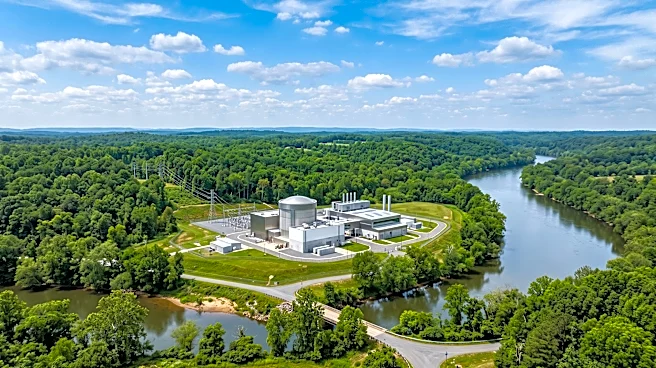
A new report by the Energy Transitions Commission, a global think-tank of energy experts, concludes that nuclear power makes no economic sense for Australia. The report, titled 'The Role of Nuclear in the Energy Transition: Complementary but Limited,'
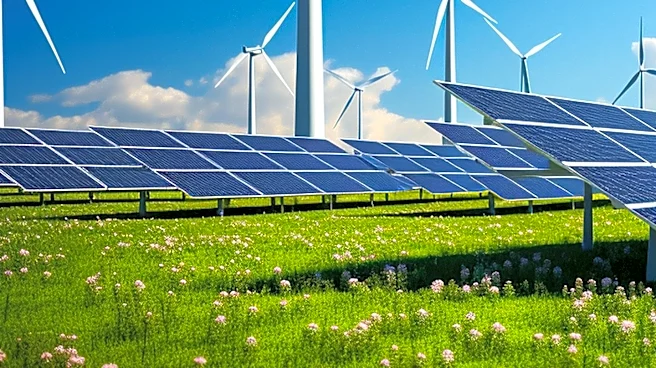
states that for countries rich in low-cost renewable resources like wind and solar, nuclear energy would lead to delays and increased costs. It argues that renewables, particularly solar, combined with batteries, offer the fastest and cheapest option for scaling electricity supply in such regions, which include most of Africa, much of Latin America, and Australia. The report also highlights that investing in nuclear power concentrates scarce capital in a few centralized projects with long lead times, during which the power system could change substantially. It further notes that small modular reactors (SMRs) are still 1-2 decades away from wide deployment and have higher early U.S. cost estimates compared to large reactors.
Why It's Important?
This report directly challenges the push for nuclear power by Australia's conservative political parties, who are advocating for it over renewables. The findings suggest that pursuing nuclear programs in countries like Australia would divert resources from cheaper alternatives, offer no total system cost benefit, and increase reliance on foreign nuclear supply chains, thereby reducing energy security. The report's conclusions align with the views of Australia's energy industry, including the Australian Energy Market Operator, CSIRO, and major utilities. If these findings are heeded, it could reinforce Australia's commitment to renewable energy and discourage significant investment in nuclear power, potentially influencing national energy policy and investment decisions. The report also debunks the notion that SMRs will be a game-changer in the near term, providing a more realistic outlook on nuclear technology's role in the global energy transition.
What's Next?
The report's release is likely to fuel the ongoing debate in Australia between proponents of nuclear power and advocates for renewable energy. Conservative political parties pushing for nuclear may face increased scrutiny and pressure to justify their stance against the economic and practical arguments presented by global experts. The findings could strengthen the position of those advocating for accelerated investment in wind, solar, and battery storage. Future energy policy decisions in Australia will likely be influenced by these economic analyses, potentially leading to a continued focus on renewable energy development rather than a pivot to nuclear power. The report also suggests that countries should carefully assess their specific resource endowments and economic conditions before committing to nuclear energy projects.
Beyond the Headlines
The report's insights extend beyond Australia, offering a broader perspective on the global energy transition. It underscores that nuclear power's viability is highly context-dependent, making economic sense only in specific countries with limited renewable resources or existing nuclear infrastructure. The emphasis on the cost of capital and labor as key drivers of nuclear project costs highlights why countries like China and South Korea can deliver nuclear generation at lower costs than Western nations. This suggests that the global energy transition will not be a one-size-fits-all approach, but rather a diverse mix of solutions tailored to regional circumstances. The report also subtly critiques the influence of the fossil fuel and climate denial industry in shaping political discourse around energy choices, implying that ideological biases can override sound economic and environmental reasoning.