








What's Happening?
A new study titled 'Construction in the Age of AI,' released by Suffolk in collaboration with the MIT Center for Real Estate and MIT Media Lab City Science group, examines how artificial intelligence (AI) can significantly improve performance and productivity
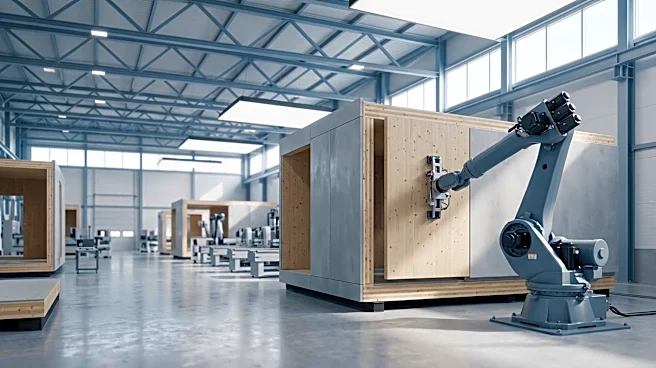
in the construction industry. The report identifies six key areas where AI shows immediate potential: design automation, offsite manufacturing, permitting, scheduling, skilled labor and subcontracting, and supply chain and procurement. The construction sector currently faces challenges such as declining productivity, fragmented project delivery, limited technology investment, rising costs, and labor shortages. The study suggests that AI can help overcome these issues by processing information faster, coordinating work more efficiently, and enabling better decision-making throughout a project's lifecycle.
Why It's Important?
This study holds significant importance for the U.S. construction industry, which is a major contributor to the national economy but has struggled with productivity for decades. The identified areas for AI application directly address critical pain points, such as lengthy approval processes, siloed data, and disconnected workflows. By leveraging AI for design automation, U.S. firms can evaluate more options earlier, balancing cost, constructability, and code requirements, potentially leading to substantial cost and schedule savings. The application of AI in supply chain and procurement can mitigate disruptions and optimize material flow, a crucial factor in a globalized economy. Furthermore, improving scheduling and skilled labor management through AI can alleviate labor shortages and enhance project delivery, making U.S. construction projects more competitive and efficient. The potential for 17% to 20% total cost savings and 22% to 25% total schedule savings in a sample multifamily project demonstrates a tangible economic impact that could revitalize the sector.
What's Next?
The findings of the MIT and Suffolk study are likely to spur increased investment and adoption of AI technologies within the U.S. construction industry. Companies may begin to prioritize pilot programs and strategic partnerships to integrate AI into their design, planning, and operational processes. The study's clear identification of high-impact areas provides a roadmap for technology developers to create tailored AI solutions for the sector. Regulatory bodies and local governments might also explore how AI can streamline permitting processes, potentially leading to policy changes that encourage technological adoption. Educational institutions and industry associations may develop new training programs to equip the workforce with the necessary skills to work alongside AI tools, preparing for a future where AI is an integral part of construction project management.
Beyond the Headlines
Beyond the immediate productivity gains, the widespread adoption of AI in construction could lead to a fundamental transformation of the industry's structure and culture in the U.S. The ability of AI to connect design decisions with available products and manufacturing capabilities could foster greater integration between design, manufacturing, and construction, potentially leading to more offsite and modular construction. This shift could reduce waste, improve quality control, and create safer working environments. However, it also raises questions about job displacement for certain roles and the need for a significant reskilling effort across the workforce. The ethical implications of AI in decision-making, particularly in areas like risk assessment and resource allocation, will also need careful consideration to ensure fairness and accountability in project outcomes.