
What's Happening?
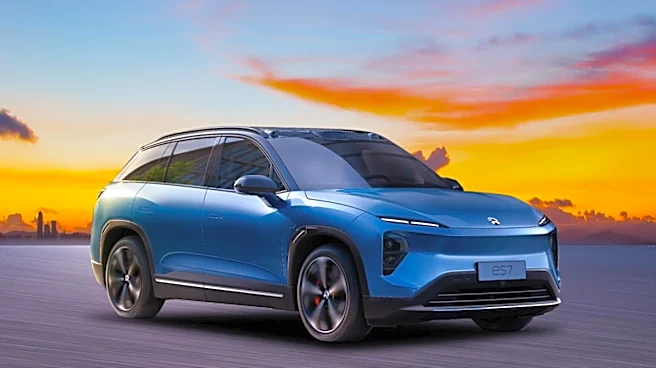
Nio Inc. (NIO) shares have fallen to a six-year low, driven by investor concerns over recent vehicle delivery figures and intense pricing competition within China's electric vehicle (EV) market. The automaker
reported delivering 34,246 vehicles last month, marking a 15.2% year-on-year decline. A significant portion of this weakness stemmed from its family-oriented ONVO division, which saw shipments drop by 51.7% to 8,383 units. In contrast, deliveries under the primary Nio brand experienced a modest increase of 5.7%. To meet its fourth-quarter target of exceeding 40,000 vehicles per month, Nio must now achieve an average of 42,900 deliveries in November and December. The company's upcoming Q3 earnings report on December 1 will place a major focus on gross margins, given the aggressive pricing strategies prevalent in the Chinese EV sector.
Why It's Important?
The decline in Nio's stock price and its delivery challenges highlight the fierce competitive landscape in the global, particularly Chinese, electric vehicle market. For U.S. investors, this situation underscores the volatility and risks associated with investing in international EV manufacturers, especially those operating in highly competitive and rapidly evolving markets. The pressure on gross margins due to aggressive pricing could impact Nio's profitability and long-term financial health, potentially affecting its ability to invest in research and development or expand its market share. The performance of major EV players like Nio can also serve as an indicator for the broader EV industry, influencing investor sentiment and strategic decisions for other automotive companies, including those in the U.S., that are heavily investing in electric vehicle technology.
What's Next?
Nio's upcoming Q3 earnings report on December 1 will be a critical event, with analysts and investors closely scrutinizing the company's gross margins and its outlook for future deliveries. The company's ability to meet its ambitious fourth-quarter delivery target of over 40,000 vehicles per month will be a key determinant of investor confidence. Should Nio fail to demonstrate a clear path to improved delivery numbers and stronger margins, its stock could face further pressure. Conversely, any positive surprises in the earnings report or a clear strategy to navigate the competitive market could help stabilize or even boost its share price. The ongoing pricing competition in China's EV market is expected to continue, forcing Nio and its competitors to innovate and adapt their strategies to maintain market relevance and profitability.
Beyond the Headlines
The challenges faced by Nio extend beyond immediate delivery numbers and stock performance, touching upon the broader dynamics of the global EV transition. The intense competition in China, a leading EV market, suggests that consolidation or strategic partnerships might become more common as companies vie for market dominance. This environment could also accelerate technological advancements and cost reductions in EV production, ultimately benefiting consumers but putting immense pressure on manufacturers' bottom lines. For the U.S., Nio's struggles could inform policy discussions around domestic EV manufacturing incentives and trade relations, as the global race for EV leadership intensifies. The long-term viability of EV companies will increasingly depend on their ability to achieve economies of scale, innovate efficiently, and differentiate their products in a crowded market.