


What's Happening?
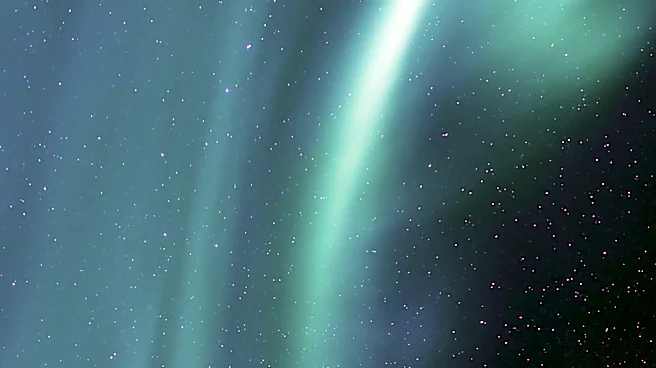
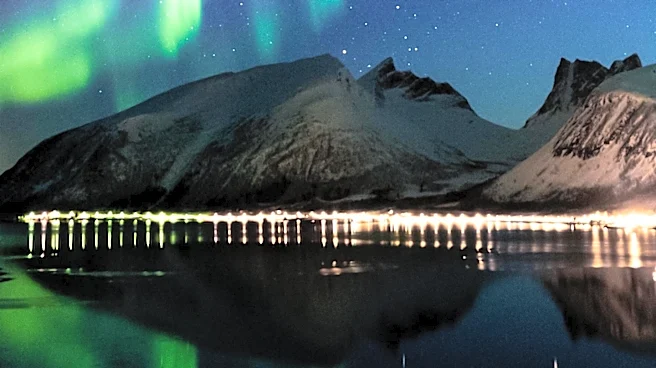
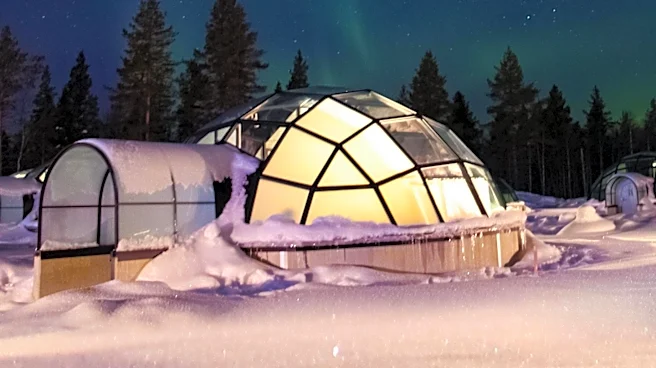
Tromsø, Norway, is highlighted as a premier destination for observing the Northern Lights, with visibility typically spanning from late August to early April. Organized tours for aurora viewing generally operate during this period, specifically from September
to early April. The city offers a combination of high latitude, an extensive tour network, and essential amenities like an airport, restaurants, and museums. While the Northern Lights can be seen from darker areas within Tromsø, urban light can diminish the visibility of fainter displays. Consequently, 'chase tours' are popular, allowing drivers to pursue clearer skies inland, away from local cloud cover. The best time for a dedicated Northern Lights trip to Norway is often cited as late February and March, offering a balance of sufficient darkness and more favorable daytime conditions for other activities.
Why It's Important?
For U.S. tourists and the global tourism industry, the identification of Tromsø as a prime Northern Lights destination provides clear guidance for travel planning. This information helps travelers optimize their chances of witnessing the aurora borealis, influencing decisions on travel dates, tour bookings, and accommodation. The robust infrastructure and tour options in Tromsø make it particularly accessible for first-time aurora seekers, potentially boosting tourism revenue for the region. The emphasis on specific months like late February and March also helps distribute tourist traffic, avoiding over-concentration during peak winter holidays. This detailed guidance can lead to more satisfying travel experiences, encouraging positive word-of-mouth and repeat visits, which are crucial for the long-term sustainability of aurora tourism.
What's Next?
Prospective travelers planning a Northern Lights trip to Tromsø should consider booking tours and accommodations well in advance, especially for the peak months of February and March. Tour operators are likely to continue refining their offerings, potentially incorporating more flexible options for cloud chasing and enhanced comfort features. Visitors are advised to allow for three to five nights in the region to maximize their chances of seeing the aurora, given that visibility is not guaranteed every night. Continued monitoring of local cloud forecasts and auroral oval positions will remain crucial for both tour operators and independent travelers. The tourism sector in Tromsø will likely continue to promote its unique blend of aurora viewing opportunities and other Arctic activities to attract a diverse range of visitors.
Beyond the Headlines
The detailed guidance on Northern Lights viewing in Tromsø underscores a broader trend in experiential tourism, where travelers seek unique and natural phenomena. This focus on specific, high-latitude locations like Tromsø highlights the economic importance of natural wonders for regional economies. It also brings to light the delicate balance between promoting tourism and managing environmental impact, particularly in sensitive Arctic regions. The reliance on 'chase tours' to find clear skies points to the unpredictable nature of weather and solar activity, adding an element of adventure and uncertainty to the experience. Furthermore, the distinction between various Norwegian locations for aurora viewing (Tromsø, Lofoten, Svalbard, Oslo) emphasizes the need for precise information in travel planning, moving beyond generic national promises to specific regional characteristics and optimal conditions.