






What's Happening?
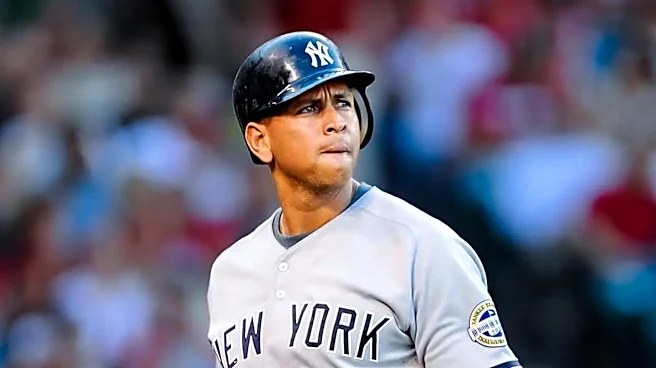
Alex Rodriguez, a former Major League Baseball player, is celebrated for his significant contributions to the New York Yankees. Acquired by the Yankees in 2004, Rodriguez quickly proved his worth by posting impressive statistics, including a .303/.403/.573
slash line and 173 home runs over his first four seasons. He won two American League MVP awards and participated in four All-Star games during this period. Despite his on-field success, Rodriguez's career was marred by controversies, including a high-profile contract opt-out and a performance-enhancing drug scandal. These issues, coupled with a reputation for underperforming in the postseason, have sparked ongoing debates about his legacy. Rodriguez retired in 2016, and since then, he has remained involved in baseball as a television analyst.
Why It's Important?
Rodriguez's career highlights the complex interplay between athletic achievement and personal conduct in professional sports. His on-field accomplishments, including joining the 3,000 Hit Club and hitting over 600 home runs, are significant milestones that contribute to his standing as one of baseball's greats. However, his involvement in performance-enhancing drug scandals and other controversies have complicated his legacy, affecting his potential induction into the Baseball Hall of Fame. This duality reflects broader issues in sports regarding the impact of personal conduct on professional recognition and legacy. Rodriguez's story also underscores the challenges teams face in managing high-profile athletes whose off-field actions can overshadow their contributions to the sport.
What's Next?
While Rodriguez has retired from playing, his influence in baseball continues through his work as a television analyst. His ongoing presence in the sport allows him to shape his post-retirement image and potentially rehabilitate his public persona. The Yankees have yet to retire his number or honor him with a plaque in Monument Park, decisions that may be influenced by his efforts to mend his reputation. As Rodriguez continues to engage with fans and the media, his legacy may evolve, potentially leading to greater recognition of his contributions to baseball despite past controversies.
Beyond the Headlines
Rodriguez's career raises important questions about redemption and forgiveness in sports. His efforts to apologize and engage positively with fans and the media suggest a path toward redemption that other athletes might follow. Additionally, his story highlights the role of media in shaping public perception of athletes, as his post-retirement work as an analyst allows him to present a more nuanced image to the public. This dynamic illustrates the potential for athletes to redefine their legacies through media engagement and public relations efforts.