






What's Happening?
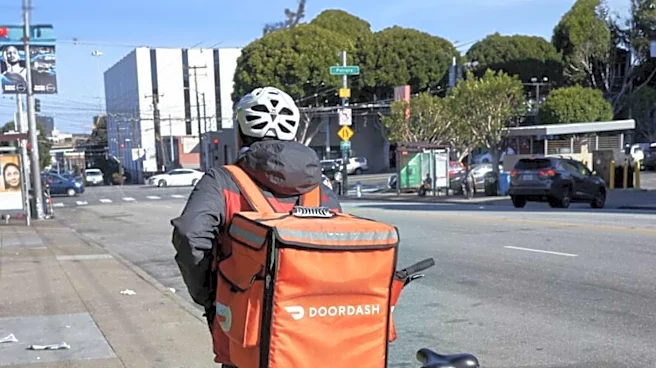
DoorDash has announced its intention to acquire Instacart for $17 billion, a move that is expected to face significant antitrust scrutiny from the Federal Trade Commission (FTC). The deal, which values Instacart at $65 per share (an 11% premium over its closing
price on October 22), aims to combine DoorDash's extensive delivery network with Instacart's grocery fulfillment technology. This acquisition would create a dominant player in the grocery delivery market, potentially controlling a substantial share of third-party online grocery marketplaces. The FTC has been actively focusing on affordability and scrutinizing the practices of delivery apps, including an ongoing case against Uber and a previous investigation into Instacart's price experimentation practices. Groundwork Collaborative President Lindsay Owens has criticized the proposed acquisition, stating it would consolidate an alarming amount of surveillance and pricing technology.
Why It's Important?
This acquisition is significant because it would reshape the competitive landscape of the U.S. grocery delivery market. A combined DoorDash and Instacart entity would possess an enormous amount of data on American shopping habits, raising concerns about surveillance and pricing strategies. The deal's potential to reduce competition could lead to higher costs for consumers, a key concern for the FTC amidst rising cost-of-living issues. For DoorDash, the acquisition offers a shortcut into the grocery business, an area it has been trying to expand. However, the merger could face opposition from grocery chains that partner with both companies, potentially leading to pushback from state attorneys general. The outcome of the FTC's review will set a precedent for future mergers in the rapidly evolving delivery sector.
What's Next?
The acquisition is expected to close at the end of 2027 or the first half of 2028, pending regulatory approval. The FTC will likely conduct a thorough review, comparing data on competitors and assessing the potential impact on market competition and consumer prices. DoorDash is expected to argue that it competes with larger entities like Walmart, Amazon, and Target, which also offer same-day grocery delivery. The companies are touting benefits such as the elimination of separate membership programs (DashPass and Instacart+), which they claim could save customers an estimated $100 million annually. However, anti-monopoly advocacy groups like the American Economic Liberties Project are already pushing regulators to block the deal, citing concerns about market control and potential negative impacts on workers and consumers.
Beyond the Headlines
Beyond the immediate market consolidation, this deal highlights the increasing importance of data in the digital economy. The combined entity's access to extensive consumer shopping data could enable sophisticated pricing and advertising strategies, raising ethical questions about data privacy and algorithmic fairness. The FTC's focus on affordability and its scrutiny of delivery app practices suggest a broader regulatory trend towards addressing consumer protection in the digital marketplace. The merger also underscores the challenges of profitability in the grocery delivery sector, where companies are constantly seeking scale and efficiency to compete with established retailers and other tech giants. The long-term implications could include a shift in how local businesses interact with delivery platforms and how consumers access essential goods.