







What's Happening?
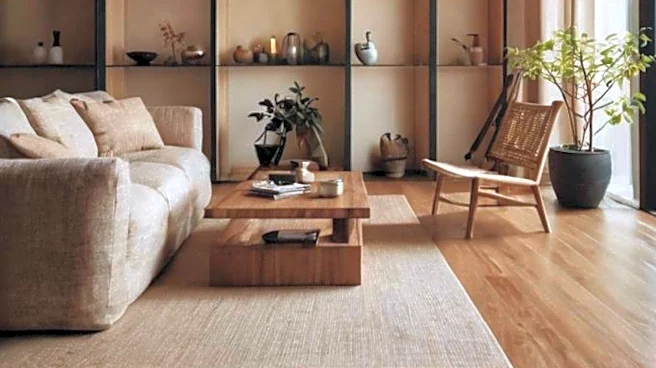
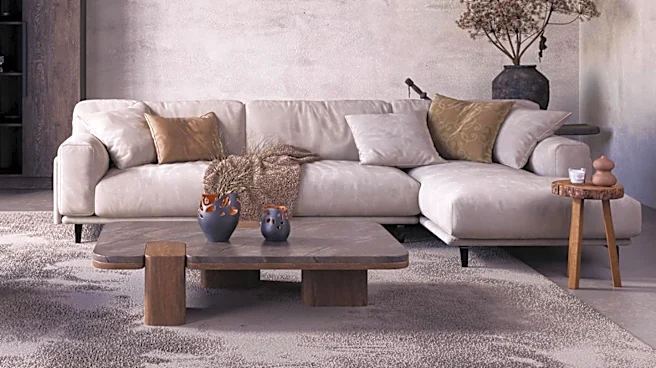
Nicola Peltz Beckham and Brooklyn Beckham have revealed their Beverly Hills home, which exemplifies an extreme minimalist aesthetic. The living and dining areas feature a restrained palette of taupe, cream, and pale oak, allowing the architectural elements
to dominate. Floor-to-ceiling sheer curtains are used to soften the windows and filter natural light without obstructing it, while a deliberate lack of excessive furniture maintains an open and uncluttered feel. Designer Tori Murphy emphasizes the importance of window treatments in such minimalist spaces, noting that curtains can provide texture, warmth, and personality. In the Beckham-Peltz home, the sheer drapery is designed to blend into the background, drawing attention to the light and views rather than acting as a decorative focal point. The meticulous attention to details like curtain folds and proportions is highlighted as crucial in achieving the desired serene and structured atmosphere.
Why It's Important?
The design choices made by Nicola Peltz Beckham and Brooklyn Beckham reflect a growing trend in luxury home aesthetics towards extreme minimalism, which prioritizes space, light, and subtle textures over overt decoration. This approach can influence interior design trends, particularly among younger, affluent demographics who may seek to emulate celebrity lifestyles. The emphasis on functional yet aesthetically pleasing elements, such as specific curtain styles and their installation, underscores a shift towards thoughtful curation in home decor. For the interior design industry, this trend could drive demand for high-quality, understated materials and custom solutions that enhance architectural features rather than conceal them. It also highlights the increasing role of social media and celebrity influence in shaping contemporary design preferences, as these homes often serve as aspirational models for broader audiences.
Beyond the Headlines
Beyond the immediate aesthetic appeal, the ultra-minimalist design of the Beckham-Peltz home touches upon broader cultural and psychological implications. In an increasingly cluttered and fast-paced world, minimalism can be seen as a response, offering a sense of calm, order, and mental clarity. The deliberate removal of excess can encourage a focus on essential elements and experiences, aligning with principles of mindfulness and intentional living. Ethically, this trend might also spark discussions about consumption patterns and sustainability, as minimalism often advocates for fewer, higher-quality possessions. However, the 'luxury minimalism' exemplified here also suggests that achieving such an uncluttered, serene environment often requires significant financial investment in premium materials and custom design, making it an aspirational rather than universally accessible lifestyle choice. This dichotomy between the ideal of simplicity and the cost of achieving it is a subtle but significant undercurrent.