





What's Happening?
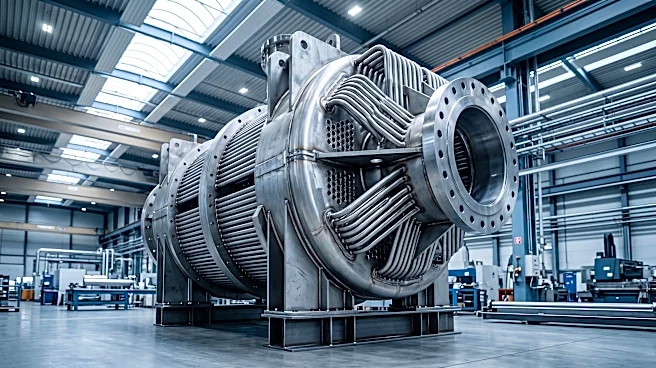
The global market for large diameter steel pipes is projected to grow from $14.2 billion in 2024 to $17 billion by 2030, exhibiting a compound annual growth rate (CAGR) of 3.1%. This growth is driven by sustained investments in oil and gas transportation,
water and wastewater networks, industrial infrastructure, urban development, and energy distribution systems. Key players in this market include ArcelorMittal SA, Nippon Steel Corporation, Tenaris S.A., and EUROPIPE GmbH. The industry faces challenges such as high raw-material and manufacturing costs, specialized welding requirements, corrosion risks, and complex logistics. Additionally, global tariffs and trade restrictions are introducing uncertainty by impacting steel costs, procurement decisions, manufacturing locations, and cross-border supply relationships. The report highlights the competitive positioning of leading companies across major regional markets, including the United States, Canada, and other global regions.
Why It's Important?
The expansion of the large diameter steel pipes market is crucial for the development and modernization of critical infrastructure in the U.S. and globally. These pipes are essential for high-capacity pipeline networks, structural construction, and industrial fluid transportation, supporting sectors like oil and gas, water treatment, chemical processing, and general construction. The projected growth signifies continued investment in foundational infrastructure, which can create jobs and stimulate economic activity. However, the impact of global tariffs and trade restrictions poses significant challenges for U.S. companies and consumers. Tariffs can increase the cost of steel, affecting procurement decisions, manufacturing expenses, and ultimately, the cost of infrastructure projects. This uncertainty can disrupt supply chains, reduce regional competitiveness, and deter investment planning, potentially slowing down vital infrastructure development and increasing costs for taxpayers and industries reliant on these materials.
What's Next?
Market participants are expected to continue addressing the challenges of high raw-material and manufacturing costs, specialized welding requirements, corrosion risks, and logistical complexities. The industry will likely see further advancements in high-strength, low-alloy steel, automated production, robotic welding, protective coatings, and pipeline monitoring to improve product quality and operational performance. Enhanced manufacturing precision and advanced coating technologies will be crucial for reducing defects, extending service life, and improving corrosion resistance. Digital inspection and monitoring systems are also anticipated to play a larger role in strengthening pipeline integrity management. Companies will need to adapt their sourcing strategies and production locations in response to ongoing tariff policies and trade negotiations to maintain competitiveness and manage costs effectively.
Beyond the Headlines
The interplay between global tariffs and the steel industry has broader implications beyond immediate economic costs. Trade policies can influence international relations and create geopolitical tensions, especially when they disrupt established supply chains and competitive landscapes. For the U.S., tariffs on steel imports are often implemented to protect domestic industries and jobs, but they can also lead to retaliatory tariffs from other countries, affecting U.S. exports. This dynamic can shift manufacturing bases and investment flows globally, potentially leading to a more fragmented and less efficient global supply chain for critical materials. The long-term impact could include higher prices for consumers, reduced innovation due to decreased competition, and a re-evaluation of global trade agreements, highlighting the complex balance between national economic interests and global trade stability.