

What's Happening?
Trützschler Group has expanded its international customer network for TRUECYCLED, an integrated solution for mechanical textile recycling and spinning preparation. This expansion includes new reference installations in Bangladesh, Pakistan, and the United
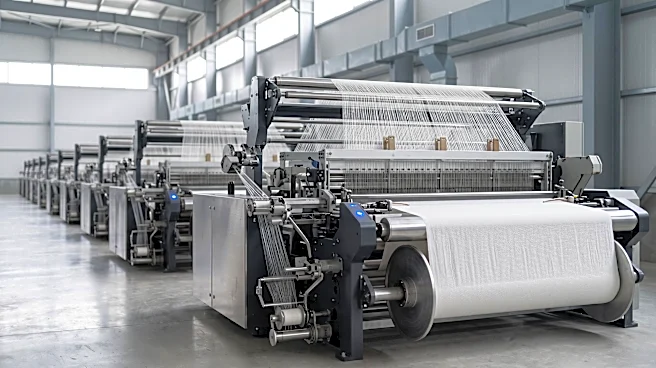
States. Material Return, based in North Carolina, has been identified as the first TRUECYCLED reference customer in the U.S. The announcement coincides with World Circular Textiles Day, highlighting the growing interest in technologies that convert pre-consumer and post-consumer textile waste into secondary fibers for new yarns. TRUECYCLED addresses the technical challenge of maintaining fiber length during mechanical recycling by coordinating tearing and spinning-preparation stages. The system uses machine settings and process configurations to minimize unnecessary fiber shortening while ensuring recovered material is adequately opened, cleaned, and blended. A typical TRUECYCLED line includes components like the BO-P bale opener, SP-MF separator, MX-U10 mixer, CL-X cleaner, TC 30Ri recycling card, and IDF 3 integrated draw frame. The TC 30Ri card is designed for gentle treatment of recycled materials, and the IDF 3 supports a shortened drafting process suitable for fiber mixtures with a high proportion of short fibers. Trützschler's reference customers produce yarns containing over 25% textile hard waste, with the exact proportion of recycled material depending on factors such as fiber type, waste quality, tearing intensity, yarn specification, and the spinning process used.
Why It's Important?
This expansion of Trützschler's TRUECYCLED network, particularly with Material Return in the U.S., signifies a crucial step towards industrial-scale textile-to-textile recycling in the United States. The U.S. textile industry, like its global counterparts, faces increasing pressure to adopt sustainable practices and reduce waste. By enabling the conversion of textile waste into new yarns, this technology directly addresses the environmental impact of textile production and consumption, reducing reliance on virgin raw materials and diverting waste from landfills. For U.S. businesses like Material Return, this means enhanced capabilities to meet the growing demand for recycled content in textiles, potentially creating new revenue streams and strengthening their position in the circular economy. The ability to produce high-quality yarns from recycled fibers at a commercial scale is vital for the widespread adoption of sustainable textiles. This development can also influence U.S. public policy by demonstrating the viability of advanced recycling technologies, potentially encouraging further investment and regulatory support for textile recycling infrastructure. It also highlights the importance of technological innovation in addressing environmental challenges within manufacturing sectors.
What's Next?
The establishment of Material Return as a U.S. reference customer for TRUECYCLED technology suggests a potential increase in the adoption of similar textile recycling solutions across the country. We can anticipate more U.S. textile manufacturers and brands exploring and investing in integrated mechanical recycling systems to incorporate recycled content into their products. This could lead to a greater availability of yarns and fabrics made from secondary fibers in the U.S. market. Further research and development will likely focus on optimizing the recycling process to achieve even higher proportions of recycled material in yarns without compromising quality, and on expanding the types of textile waste that can be effectively recycled. Stakeholders, including textile brands, manufacturers, and policymakers, may collaborate to develop more robust supply chains for textile waste collection and processing. The success of these early adopters will be critical in demonstrating the economic and environmental benefits, potentially accelerating the transition towards a more circular textile industry in the U.S. and globally.
Beyond the Headlines
Beyond the immediate economic and environmental benefits, the expansion of textile recycling technologies like TRUECYCLED has broader implications for the U.S. manufacturing landscape and consumer behavior. It challenges the traditional linear model of 'take-make-dispose' in the textile industry, fostering a more circular approach. This shift could lead to a re-evaluation of product design, encouraging manufacturers to consider the end-of-life of textiles from the outset, promoting design for recyclability. Culturally, increased awareness and availability of recycled textile products could influence consumer preferences, driving demand for sustainable fashion and home goods. This could also spur innovation in other areas of waste management and material science, as the principles of circularity are applied to diverse industries. Legally and ethically, the development of robust standards for recycled content and transparent labeling will be crucial to build consumer trust and prevent 'greenwashing.' The long-term impact could be a more resilient and resource-efficient U.S. economy, less dependent on finite virgin resources and better equipped to manage its industrial waste streams, contributing to a more sustainable future.