






What's Happening?
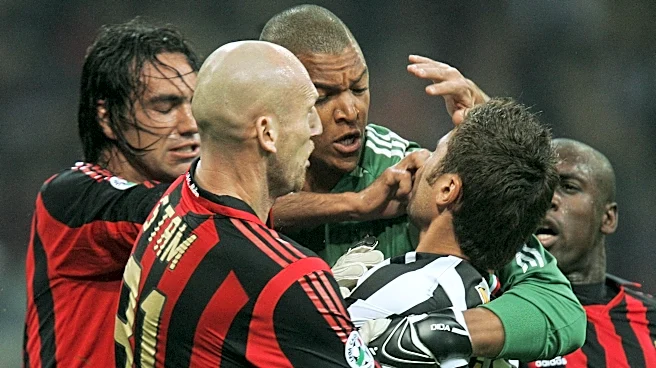
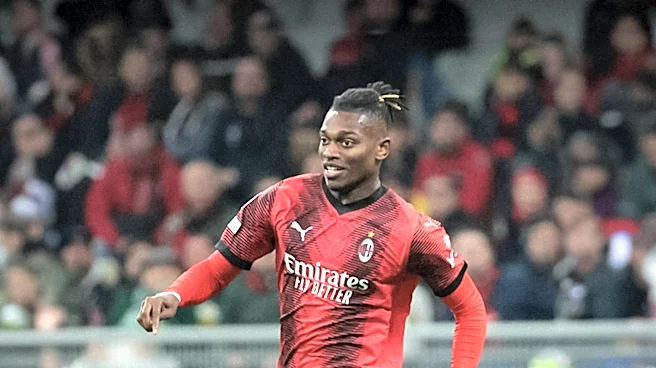
AC Milan, once a dominant force in European football, is currently experiencing a significant decline, struggling to attract world-class players and maintain its former glory. The club, which last won the Champions League in 2007, has only reached the quarter-finals
twice since then, indicating a prolonged period of underperformance on the European stage. Recent comparisons highlight this downturn, with the club's squad market value now lower than that of Premier League teams like Bournemouth. For instance, Bournemouth's squad is valued at approximately €624 million, while AC Milan's is €503.2 million. This financial disparity is further evidenced by Deloitte Football Money League rankings, where AC Milan placed 15th with an annual revenue of €410.4 million, falling behind seven Premier League clubs. The club's iconic San Siro stadium is also slated for demolition, further severing ties with its storied past. This situation reflects a broader shift in European football's financial landscape, where the Premier League's substantial domestic TV rights deals give English clubs a significant advantage.
Why It's Important?
The decline of AC Milan is significant as it symbolizes a broader shift in the power dynamics of European football, largely driven by financial disparities. Historically, clubs like AC Milan were at the pinnacle of the sport, attracting top talent and consistently competing for major titles. Their current struggles highlight how financial muscle, particularly from the Premier League's lucrative TV rights, has reshaped the competitive landscape. This means that even historically successful clubs from other leagues find it increasingly difficult to compete for elite players and maintain their status. The situation impacts the overall competitiveness and diversity of European club competitions, potentially leading to a more predictable outcome where financially dominant leagues and clubs consistently prevail. For fans, it represents a loss of the traditional rivalries and the romanticism associated with clubs built on legacy rather than sheer economic power. The inability to attract top-tier players also affects the quality of play and the global appeal of leagues outside the Premier League.
What's Next?
The immediate future for AC Milan involves navigating a challenging financial environment and attempting to rebuild its squad to regain competitiveness. The club will likely continue to focus on strategic player acquisitions that fit within their financial constraints, rather than competing for the most expensive global stars. There may be an increased emphasis on youth development and scouting for undervalued talent to bridge the gap with wealthier clubs. The demolition of the San Siro and the potential construction of a new stadium could offer new revenue streams, but this is a long-term prospect. For European football as a whole, the trend of financial dominance by a few leagues, particularly the Premier League, is expected to continue. This could lead to further discussions about financial fair play regulations and revenue distribution models to ensure a more balanced competitive environment across different leagues. Other historically significant clubs facing similar financial pressures may also need to adapt their strategies to remain relevant in this evolving landscape.
Beyond the Headlines
Beyond the immediate financial and sporting implications, AC Milan's decline touches upon deeper themes of tradition versus modernization in football. The planned demolition of the San Siro, a stadium steeped in history and iconic moments, symbolizes a broader trend where historical venues are replaced by modern, revenue-generating facilities. This raises questions about the preservation of football heritage and the balance between commercial interests and cultural significance. Ethically, the growing financial chasm in football raises concerns about competitive integrity and the potential for a closed-off elite, where only the wealthiest clubs can consistently succeed. This could diminish the aspirational aspect of the sport for smaller clubs and leagues. Culturally, the shift impacts fan identity and loyalty, as the allure of traditional giants wanes in the face of new, financially powerful contenders. The long-term shift could see a further consolidation of power in a few super-clubs, potentially altering the global appeal and structure of professional football.