






What's Happening?
RYAM, a Quebec-based paperboard manufacturer, announced the closure of its industrial complex in Temiscaming, Quebec, effective September. This decision will result in 425 unionized and non-unionized workers losing their jobs. The company cited unsustainable
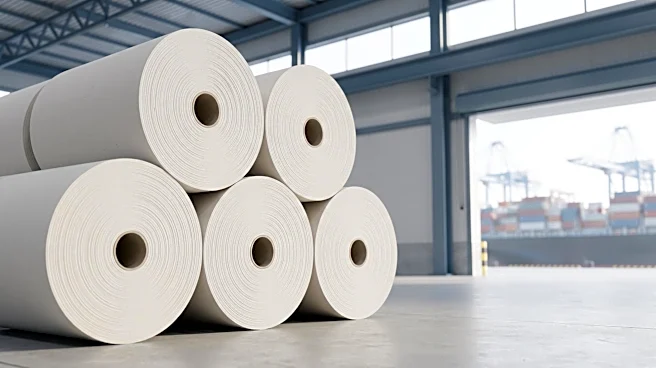
business conditions caused by 50% U.S. tariffs targeting the Canadian forest industry. The Temiscaming plant, which has operated for nearly a century and is the largest employer in the community of 2,500, produces high-purity cellulose used in construction materials, food, pharmaceutical products, high-yield pulp, and coated paperboard. Approximately 20% of Canada's market share in these products is held by the plant, with most of its output shipped to the United States. RYAM, headquartered in Jacksonville, Florida, acquired the mill in 2017. A company spokesperson stated that the duration of the shutdown is undetermined, with only the wastewater treatment plant and Boiler No. 4 continuing operations.
Why It's Important?
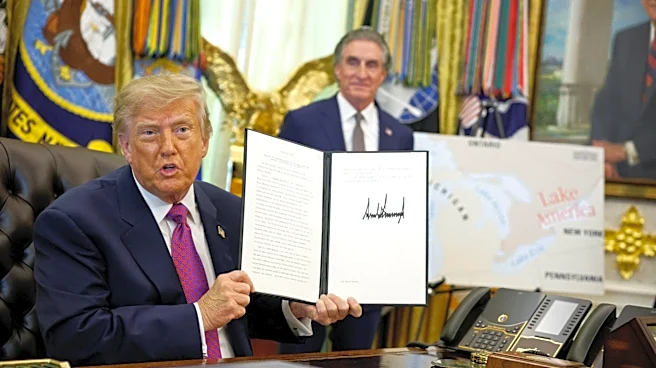
The closure of RYAM's Quebec plant highlights the significant economic impact of U.S. tariffs on Canadian industries and the broader North American trade relationship. The 50% tariffs on Canadian forest products have rendered operations unsustainable for a major manufacturer, leading to substantial job losses and economic instability in a single-industry town. This event underscores the vulnerability of cross-border supply chains to trade disputes and protectionist policies. For the U.S., while tariffs aim to protect domestic industries, they can also disrupt the supply of essential materials like high-purity cellulose, which is used in various American products. The situation also reflects a broader consolidation trend in the North American pulp and paper sector, raising concerns about the long-term competitiveness of the industry in both countries. The tariffs, described as an 'economic war' by Temiscaming Mayor Alain Gauthier, demonstrate how trade policies can have immediate and severe consequences on communities and workers.
What's Next?
The RYAM plant is scheduled to shut down on September 15, with the duration of the closure remaining uncertain. Unifor Quebec director Daniel Cloutier noted that there is no agreement for the plant to reopen even if the tariff issue is resolved, indicating a potential long-term or permanent cessation of operations. Local officials, including Temiscaming Mayor Alain Gauthier and Dave Plourde, president of the Federation of Northern Ontario Municipalities (FONOM), are urging federal and provincial governments to collaborate with RYAM, the union, and regional partners to find solutions that could allow operations to resume. FONOM has also suggested that government programs like FedNor and the Northern Ontario Heritage Fund Corporation should assist affected suppliers, businesses, and communities in Ontario. The immediate focus will be on supporting the 425 affected workers and mitigating the economic fallout in the Temiscaming region, while efforts continue to address the underlying trade dispute between the U.S. and Canada.
Beyond the Headlines
This incident extends beyond immediate job losses, revealing deeper implications for the economic interdependence of the U.S. and Canada and the future of the North American manufacturing sector. The use of tariffs as a primary tool in trade disputes can create a ripple effect, impacting not only the targeted industries but also downstream sectors and local economies. The closure of a long-standing industrial complex in a single-industry town like Temiscaming can lead to significant social disruption, including population displacement and a decline in local services. Furthermore, the reliance on U.S. markets for a substantial portion of Canadian forest products highlights the need for diversification and resilience in national economic strategies. The 'economic war' rhetoric underscores a shift in international trade relations, where political tensions can directly translate into severe economic consequences, challenging the long-held principles of free trade and integrated markets between close allies.