




What's Happening?
FutureMain, a South Korean industrial artificial intelligence company specializing in machinery diagnostics and predictive maintenance, is seeking a Nasdaq listing to facilitate its expansion into global manufacturing markets. The company announced on September
11, 2026, that it entered a definitive business combination agreement with ChampionsGate Acquisition Corp., a Nasdaq-listed special purpose acquisition company (SPAC). The transaction is anticipated to close in 2027, pending regulatory and shareholder approvals. This strategic move aims to build the necessary scale, operational capacity, and global service infrastructure to cater to major industrial clients. FutureMain's flagship product, ExRBM 2.0, is an AI-powered platform designed to identify potential equipment faults, explain their causes, and recommend maintenance actions, moving beyond traditional threshold-based monitoring. The platform incorporates 38 years of machinery diagnostic engineering expertise and has demonstrated a 98.3% automatic diagnostic accuracy in tests by the Korea Testing Laboratory (KTL). The company has also introduced an AI assistant based on a small language model (sLLM) for natural-language interaction with machinery information.
Why It's Important?
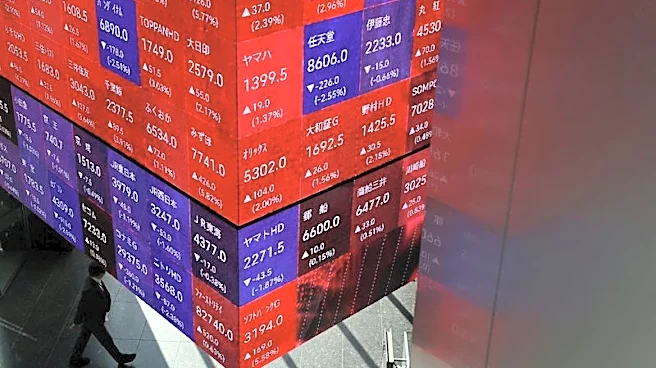
FutureMain's pursuit of a Nasdaq listing signifies a critical step for the company to access U.S. capital markets, which is essential for its international growth and the broader adoption of its industrial AI technologies. For U.S. manufacturing and industrial sectors, this could mean enhanced access to advanced predictive and prescriptive maintenance solutions. The ability to prevent unexpected machinery shutdowns, which can have far-reaching consequences across various industries like automotive, pharmaceuticals, and power generation, is vital for operational efficiency and economic stability. The company's focus on explainable AI (XAI) in ExRBM 2.0 is particularly important in industrial environments, where engineers require clear reasoning and evidence for AI-generated diagnoses before acting on critical warnings. This approach fosters trust in AI systems and supports more informed decision-making, potentially reducing costly downtime and improving safety in U.S. factories and facilities.
What's Next?
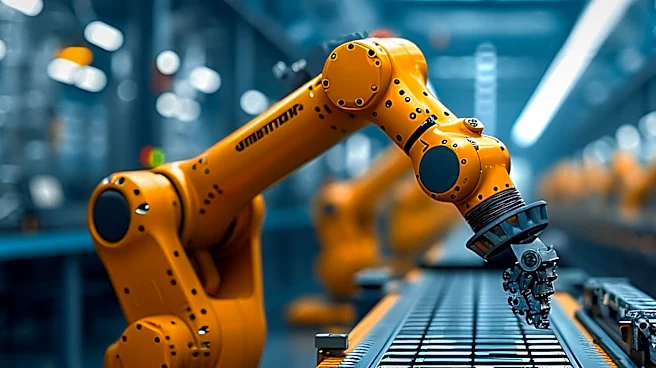
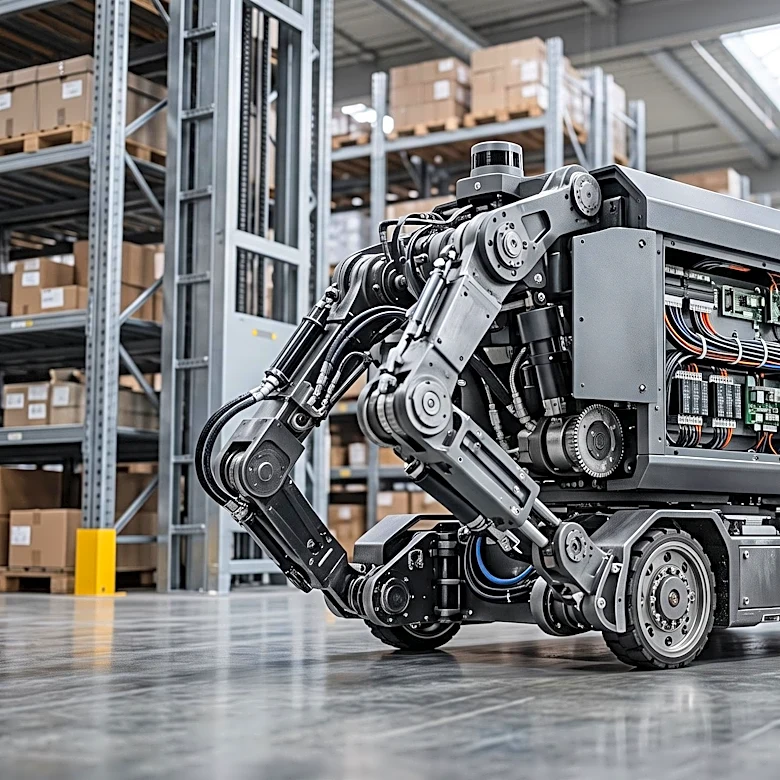
The proposed transaction with ChampionsGate Acquisition Corp. is expected to close in 2027, subject to regulatory and shareholder approvals. Upon completion, FutureMain will be listed on Nasdaq, providing it with increased visibility and access to capital for its global expansion. The company plans to continue deploying its technologies across various industrial sectors, including battery manufacturing, pharmaceuticals, power generation, and shipbuilding, with existing customer references like LG Energy Solution and Hanwha Ocean. FutureMain is also expanding into robotics, with a large-scale predictive maintenance project involving welding robots at HD Hyundai Construction Equipment's Ulsan facility. The development of an AI assistant based on a small language model (sLLM) suggests future advancements in human-machine interaction within industrial settings, allowing engineers to query machinery information using natural language. The company's long-term vision includes a manufacturing-focused vertical AI platform that integrates equipment health, production processes, quality management, and robotics, aiming for hyperconnected autonomous production.
Beyond the Headlines
FutureMain's strategy underscores a significant shift in the industrial landscape, where AI is moving beyond simple automation to become an integral part of complex decision-making and operational intelligence. The emphasis on embedding decades of engineering knowledge into AI algorithms highlights the value of domain-specific expertise in developing effective AI solutions for real-world industrial challenges. This approach contrasts with more generalized AI applications and suggests a future where specialized AI, deeply integrated with physical systems, will drive productivity and resilience in manufacturing. The ethical implications of AI in industrial settings, such as job displacement, the need for upskilling the workforce, and ensuring the reliability and safety of AI-driven systems, will become increasingly prominent. Furthermore, the global expansion of such technologies could lead to a more interconnected and efficient global supply chain, but also raises questions about data sovereignty and cybersecurity in an increasingly automated world.