


What's Happening?
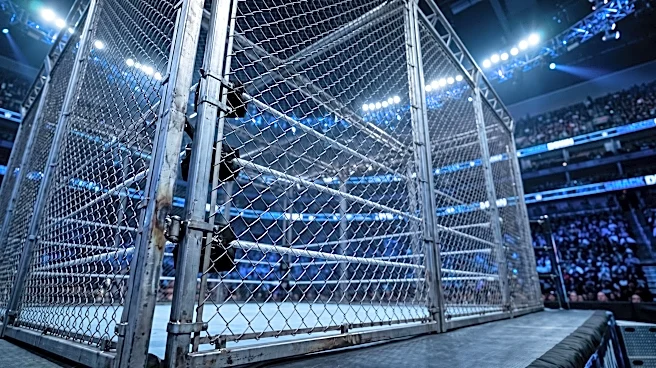
Former WWE and ECW wrestler Stevie Richards has voiced his disappointment regarding the audience's subdued reaction to Darby Allin's fall from the Blood & Guts cage. According to WrestlingHeadlines, Richards, speaking on The Stevie Richards Show, contrasted
the crowd's response to Allin's dangerous stunt with the sustained concern observed during Mick Foley's famous Hell in a Cell fall. Wardlow sent Allin through tables from the cage roof after the November 4 match. Richards noted that many people in the audience remained seated and did not show the expected level of concern or excitement, suggesting a 'sublime response' rather than a 'people going banana type response.' He attributed this lack of reaction to creative decisions and the repetition of such high-risk spots, rather than blaming the fans.
Why It's Important?
Stevie Richards' critique highlights a significant issue within professional wrestling regarding the diminishing impact of high-risk stunts. When dangerous maneuvers fail to elicit a strong emotional response from the audience, it can devalue the perceived risk and the overall storytelling. This could lead to wrestlers feeling pressured to perform increasingly dangerous spots to achieve the desired crowd reaction, potentially increasing the risk of injury without the commensurate payoff in audience engagement. For wrestling promotions, a lack of crowd reaction to major spots indicates a potential disconnect between creative direction and audience expectations, which could impact viewership and live attendance if fans become desensitized to extreme action.
What's Next?
Richards' comments suggest a need for wrestling promotions to re-evaluate their approach to high-risk stunts. If the audience is becoming desensitized, promotions might need to scale back the frequency of such spots or find new ways to build anticipation and emotional investment around them. This could involve more careful storytelling leading up to dangerous moments, emphasizing the personal stakes for the wrestlers involved, or reserving such spots for truly pivotal moments. Failure to address this could lead to a continued decline in audience engagement with extreme wrestling, potentially impacting the long-term appeal of certain match types and performers.
Beyond the Headlines
The discussion around Darby Allin's cage fall and the crowd's reaction touches upon the evolving psychology of professional wrestling audiences. In an era where extreme stunts are increasingly common, the threshold for what constitutes a truly shocking or impactful moment has risen. This raises ethical questions about the balance between entertainment and wrestler safety, as performers might feel compelled to push boundaries further to elicit a reaction. It also speaks to the art of pacing and storytelling in wrestling; a dangerous spot, no matter how spectacular, loses its impact if it's not integrated into a compelling narrative or if the audience has become accustomed to such occurrences. The challenge for promotions is to innovate without desensitizing their audience or compromising the well-being of their talent.