






What's Happening?
Egypt has entered into an agreement with Contemporary Amperex Technology Co. Limited (CATL) and Egyptian battery manufacturer BME to establish a battery manufacturing plant. The agreement was witnessed by Egyptian Prime Minister Mostafa Madbouly. The initial
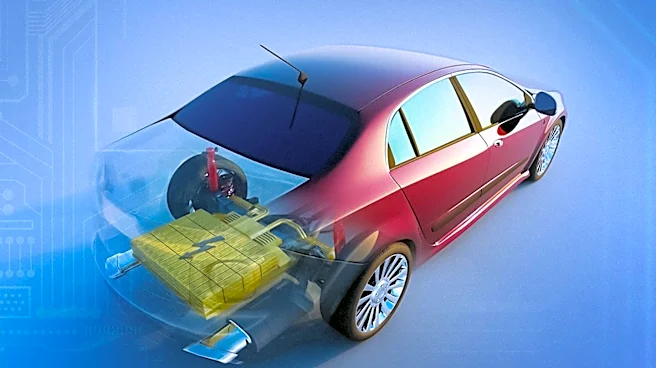
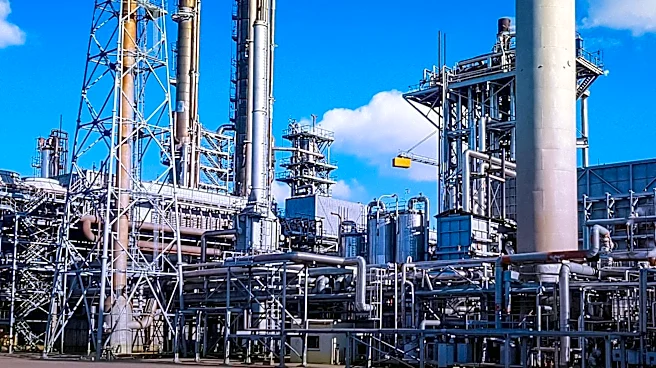
phase of the facility is designed to produce battery systems for heavy commercial vehicles, with an annual production capacity of 1 GWh. The project's initial investment is projected to exceed EGP 2 billion. This partnership aims to combine CATL’s battery technology and expertise with BME’s manufacturing and engineering capabilities. The factory is intended to serve as an industrial base for battery system manufacturing in Egypt, targeting a 40% local content ratio and supplying both Egyptian and international markets. A second phase is planned to expand the facility's annual production capacity to 5 GWh, broadening its product range to include passenger vehicle batteries and energy-storage systems for renewable electricity.
Why It's Important?
This agreement signifies Egypt's strategic move to develop its local battery manufacturing capabilities and attract foreign investment and technology into its electric mobility and automotive component sectors. By establishing a domestic battery production facility, Egypt aims to reduce its reliance on imported battery systems, potentially lowering transportation and logistics costs for vehicle manufacturers operating within the country. The project is also expected to strengthen domestic manufacturing capabilities and foster the development of technical skills related to battery production, electric mobility, and energy storage. This initiative aligns with global trends towards electric vehicles and renewable energy storage, positioning Egypt to become a regional hub for battery system manufacturing. The expansion to 5 GWh in the second phase indicates a long-term vision for comprehensive battery production, including solutions for passenger vehicles and renewable energy projects, which could have significant economic and environmental benefits for the nation.
What's Next?
The Egyptian government, led by Prime Minister Mostafa Madbouly, is focused on accelerating the implementation of this project and moving towards its subsequent execution stages. The initial phase will concentrate on manufacturing battery systems for heavy commercial vehicles, with a target of 1 GWh annual production capacity. Following this, a second phase is planned to significantly increase the facility's annual production capacity to 5 GWh. This expansion will also broaden the product range to include batteries for passenger vehicles and energy-storage systems for renewable electricity generated from solar and wind projects. The partnership is expected to facilitate technology transfer and the development of a local supply chain for battery manufacturing, indicating future collaborations and investments in related industries. The project's success will likely influence further government support for the battery industry and electric mobility in Egypt.
Beyond the Headlines
This collaboration between Egypt, CATL, and BME extends beyond mere manufacturing, representing a significant step towards fostering technological self-sufficiency and economic diversification in Egypt. By developing a local battery manufacturing supply chain, Egypt is not only addressing its immediate needs for electric vehicle components but also building a foundation for future innovation in energy storage and electric mobility. This initiative could create numerous skilled jobs, stimulate local research and development, and attract further foreign direct investment in high-tech industries. The emphasis on a 40% local content ratio suggests a commitment to integrating local businesses and labor into the production process, thereby maximizing the economic benefits within Egypt. Furthermore, the long-term vision to include energy-storage systems for renewable electricity highlights Egypt's dedication to sustainable development and its transition to a green economy, potentially setting a precedent for other developing nations.