






What's Happening?
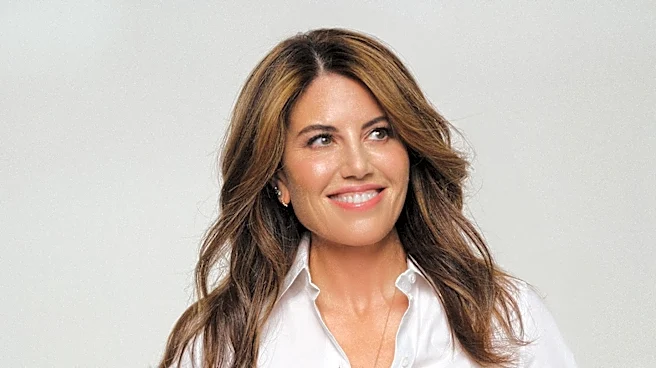
Monica Lewinsky, known for her involvement in the 1990s scandal with President Bill Clinton and host of the podcast 'Reclaiming,' has shared insights into her media consumption habits. She emphasizes the importance of discipline in her relationship with media.
Lewinsky outlines personal rules such as allowing herself to check Instagram but not email when she wakes up in the middle of the night, and avoiding asking AI for news. She also notes a rule against phones at the dinner table, particularly as her young daughter mimics scrolling on a play phone. Lewinsky identifies Kara Swisher, Sherrilyn Ifill, and Anderson Cooper as voices she trusts most in media. For escape, she enjoys reading novels, watching 'Survivor,' and listening to 'Sesame Street' sing-alongs in the car. Her most visited news sites include The Guardian, FT, and The New York Times, and she subscribes to several publications, primarily U.S. media despite living in the U.K.
Why It's Important?
Monica Lewinsky's candid discussion about her media diet offers a unique perspective on navigating the fragmented and often overwhelming modern information landscape. Her emphasis on discipline and specific rules for media engagement highlights a growing concern among individuals about the impact of constant connectivity and the proliferation of information. This is particularly relevant in an era where misinformation and 'AI slop' are prevalent, as noted by other media insiders. Her choice of trusted voices and preferred news sources reflects a desire for credible and well-vetted information, which can influence public discourse and media literacy. For the media industry, her habits underscore the continued relevance of established news organizations and the emerging role of podcasts and social media as both news sources and platforms for personal expression and escape.
What's Next?
Lewinsky's public sharing of her media habits could encourage a broader conversation about mindful media consumption and digital well-being. As more public figures and individuals articulate their strategies for managing information overload, there may be an increased demand for tools and practices that promote healthier relationships with media. This could lead to a greater focus on media literacy education, the development of features in social media platforms that support disciplined usage, and a continued emphasis on journalistic integrity from news organizations. Her podcast, 'Reclaiming,' further positions her as a voice in discussions around public narrative and personal agency, suggesting future engagements where she might delve deeper into these themes, potentially influencing how others approach their own media consumption.
Beyond the Headlines
Beyond the practical aspects of media consumption, Lewinsky's reflections touch upon deeper societal implications regarding privacy, public perception, and the long-term effects of media scrutiny. Her past experiences have uniquely positioned her to understand the power and pitfalls of media. Her current approach to media, characterized by discipline and a search for trusted voices, can be seen as a form of reclaiming agency in a world where personal narratives are often shaped by external forces. This perspective is crucial in an age where individuals, especially public figures, grapple with maintaining authenticity and mental well-being amidst constant digital exposure. Her insights contribute to a broader cultural dialogue about how individuals can navigate and control their digital lives, fostering a more intentional and less reactive engagement with information.