





What's Happening?
Ukrainian defense technology company UFORCE has secured $700 million in a recent funding round, elevating its valuation to $6 billion. This significant investment reflects growing investor confidence in autonomous weapons systems, particularly those proven
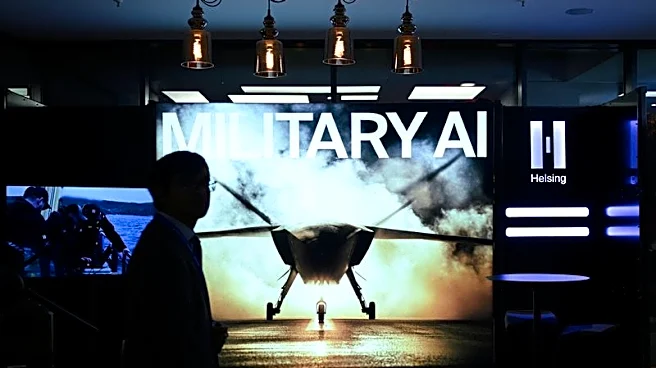
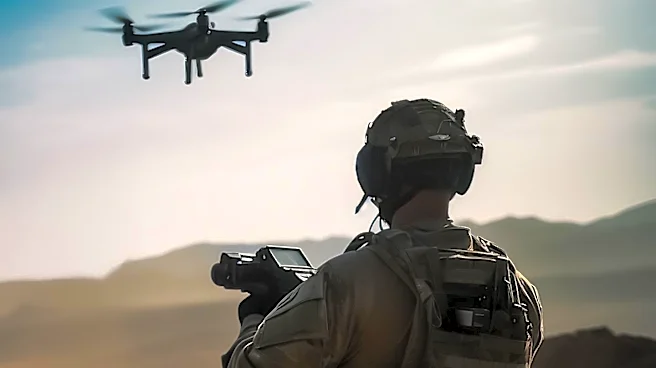
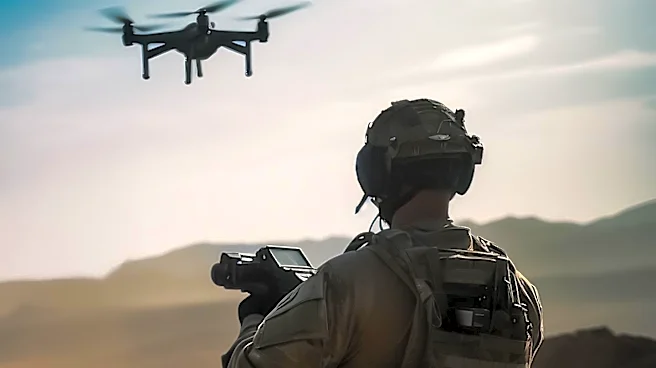
effective on the Ukrainian battlefield. UFORCE specializes in developing unmanned aerial, maritime, and land systems, alongside AI software designed for their coordination. The company previously raised $50 million in March at a $1 billion valuation. The latest Series A round was co-led by Valor Equity Partners and the U.K.'s National Wealth Fund, attracting participation from investors across Silicon Valley, Europe, and Asia. UFORCE CEO Oleg Rogynskyy reported that the company's bookings have more than doubled over the past year, although specific figures were not disclosed. The company plans to utilize the new capital to expand its manufacturing capabilities both within Ukraine and in allied nations, including the U.S., Europe, Asia-Pacific, and the Middle East.
Why It's Important?
The substantial valuation and funding secured by UFORCE underscore a significant shift in the defense industry, highlighting the increasing importance and investment in autonomous warfare technologies. The success of UFORCE, a company whose products are actively deployed and tested in the ongoing conflict in Ukraine, demonstrates a market demand for battle-proven defense solutions. This trend suggests a broader re-evaluation of conventional military equipment, as relatively inexpensive drones and unmanned systems are proving to be effective alternatives to traditional crewed tanks and fighter jets. For the U.S. and its allies, this development signals a potential acceleration in the adoption and integration of similar autonomous systems into their own defense strategies, driven by the observed efficacy and cost-effectiveness. The expansion of UFORCE's manufacturing into allied countries, including the U.S., could also foster greater technological collaboration and supply chain resilience in advanced defense systems.
What's Next?
UFORCE intends to use its new funding to significantly scale its manufacturing operations, both domestically in Ukraine and internationally across allied countries. This expansion suggests a future where UFORCE's autonomous systems could become more widely available to NATO and other allied nations, potentially influencing global defense procurement strategies. The company's commitment to prioritizing Ukrainian military requirements first, even amidst growing international demand, indicates a continued focus on the immediate conflict while simultaneously building a global presence. Furthermore, the success of UFORCE may encourage other defense technology startups to seek similar investment, potentially leading to a surge in innovation and competition within the autonomous weapons sector. The company's growth also highlights the ongoing learning curve for militaries worldwide, as they adapt to the lessons learned from the conflict in Ukraine regarding drone warfare and AI integration.
Beyond the Headlines
The rapid rise and substantial valuation of UFORCE reflect a deeper transformation in the nature of modern warfare, moving towards more autonomous and AI-driven systems. This shift raises critical ethical and strategic questions regarding the future of combat, including the role of human decision-making in deploying lethal force and the potential for algorithmic bias in targeting. The company's emphasis on challenging the economics of conventional warfare by deploying large numbers of inexpensive autonomous systems could democratize access to advanced military capabilities, potentially altering geopolitical power dynamics. Moreover, the reliance on AI-coordinated swarms and unmanned platforms necessitates robust cybersecurity measures and advanced communication solutions to prevent exploitation by adversaries. The ongoing development and deployment of these technologies will likely drive international discussions on arms control, the laws of armed conflict, and the responsible development of artificial intelligence in military applications.