






What's Happening?
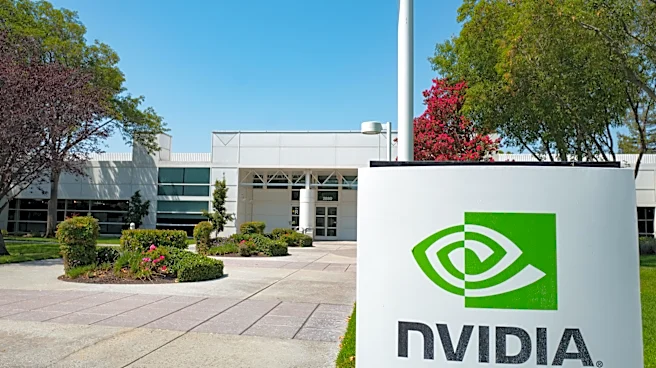
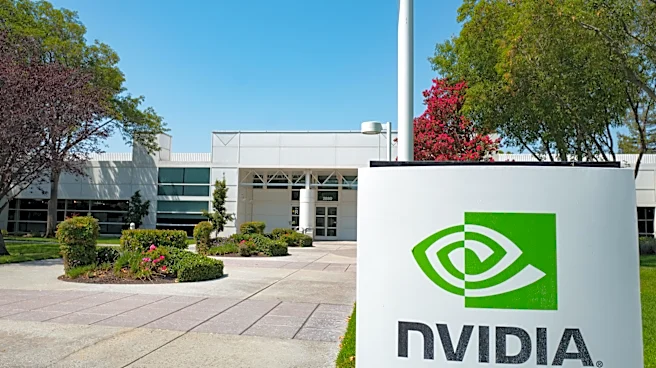
Market strategist Jim Bianco of Bianco Research has characterized NVIDIA as the 'Federal Reserve of AI,' suggesting that the company dictates the pricing, supply, and timing of AI compute resources in a manner similar to how the Federal Reserve influences
the money supply. This comparison highlights NVIDIA's significant control over the AI industry's growth and development. NVIDIA's third-quarter fiscal 2027 results reported revenue of $115.84 billion, a 103.2% year-over-year increase, with Data Center revenue alone reaching $107.6 billion, up 110%. The company also reported guarantee exposure of up to $118 billion, including $105 billion tied to SB Energy's Ohio campus, which hosts NVIDIA infrastructure for OpenAI, and an additional $390 billion in supply commitments.
Why It's Important?
NVIDIA's dominant position means that its health and operational decisions directly impact the entire AI ecosystem. Its ability to allocate AI compute resources determines the pace at which hyperscalers, neoclouds, and frontier research labs can build and innovate. This level of influence can create both opportunities and challenges for the U.S. economy and technology sector. While it ensures a standardized and potentially efficient supply of critical AI components, it also concentrates significant power in one entity, raising questions about market competition and potential bottlenecks. The substantial financial guarantees NVIDIA provides to its customers, such as the $105 billion for SB Energy's Ohio campus, further intertwine its financial well-being with the broader AI infrastructure development, making its stability crucial for the industry's continued expansion.
What's Next?
Given NVIDIA's pivotal role, market observers will closely monitor its financial performance, supply chain management, and strategic decisions. Any shifts in NVIDIA's pricing, allocation policies, or production capacity could have ripple effects across the AI industry, affecting everything from startup innovation to the operational costs of major tech companies. The company's continued growth and influence may also attract increased scrutiny from regulators regarding market dominance and potential anti-competitive practices. Furthermore, the ongoing demand for AI compute, as indicated by NVIDIA's strong revenue guidance, suggests that the company will continue to be a critical determinant of the AI sector's trajectory in the foreseeable future.
Beyond the Headlines
The 'Federal Reserve of AI' analogy extends beyond mere market dominance; it implies a systemic importance that could have profound implications for national security and economic policy. If one company controls such a vital resource for a transformative technology like AI, it raises questions about resilience, diversification, and potential vulnerabilities. Governments and industries might explore strategies to foster greater competition or develop alternative sources for AI compute to mitigate risks associated with over-reliance on a single provider. This situation also highlights the increasing intertwining of technological infrastructure with macroeconomic stability, suggesting that the health of key tech companies can have broader economic consequences, similar to traditional financial institutions.