





What's Happening?
The Pitti Uomo trade fair in Florence, a key event in the menswear fashion calendar, showcased its latest street style trends amidst intense summer heat. This year's event highlighted a strong influence from the 1970s, with wide-leg flared trousers, broad
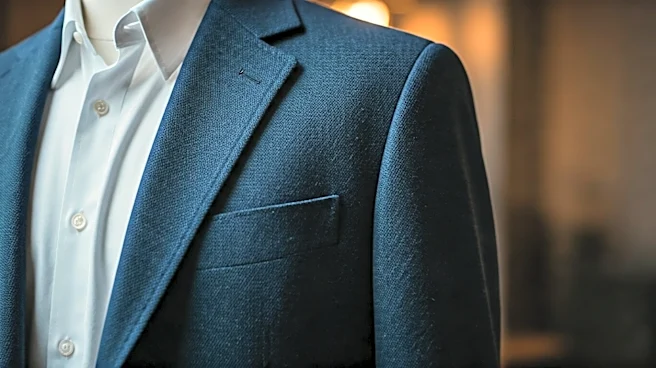
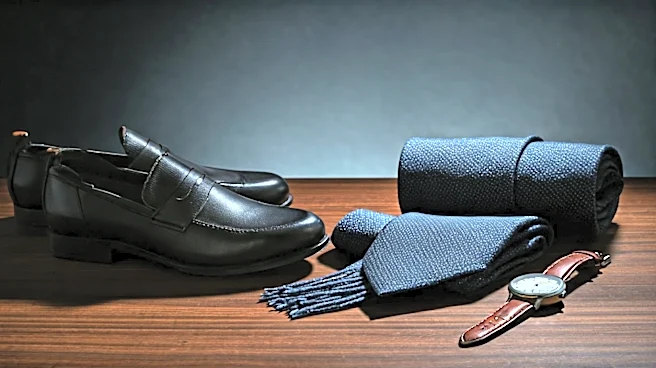
lapels, and open collars in colors like cream white, mustard yellow, and deep navy blue. The event, known for its focus on traditional tailoring, adapted to the high temperatures by making shorts a popular choice, often paired with structured tops. Denim-on-denim also made a significant appearance, defying the summer heat. Accessories, particularly bags, were prominent, with styles ranging from patinated leather document holders to printed cotton shoppers.
Why It's Important?
Pitti Uomo sets the stylistic tone for upcoming menswear collections, influencing fashion trends globally. The event's adaptation to extreme heat conditions by incorporating shorts and lightweight fabrics reflects a shift towards more practical yet stylish menswear solutions. This trend could impact retail strategies and consumer preferences, encouraging brands to innovate in fabric technology and design to accommodate climate challenges. The emphasis on accessories as standalone style statements may also drive market demand for unique and functional fashion items.
What's Next?
As Pitti Uomo continues to influence global menswear trends, designers and brands may increasingly focus on creating collections that balance style with practicality, especially in response to climate conditions. The success of this year's event in showcasing heat-adapted fashion could lead to more widespread adoption of similar styles in other fashion weeks and retail collections. Additionally, the prominence of accessories might inspire new collaborations and product lines, emphasizing versatility and individuality in menswear.
Beyond the Headlines
The event's focus on seventies-inspired fashion without excessive nostalgia suggests a broader cultural trend of reinterpreting past styles to fit contemporary aesthetics. This approach may resonate with consumers seeking both familiarity and modernity in their fashion choices. Furthermore, the emphasis on practical fashion solutions in response to climate conditions highlights the industry's growing awareness of environmental challenges and the need for sustainable practices.