

What's Happening?
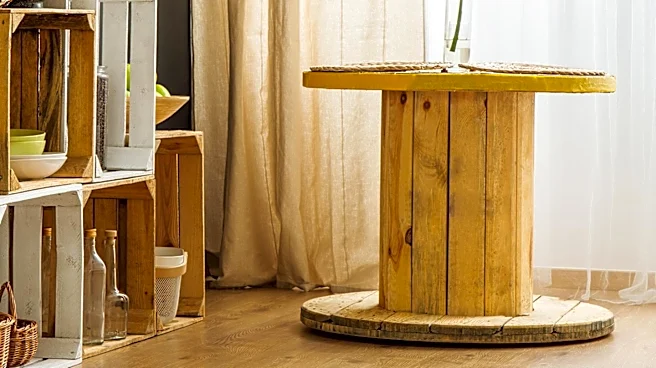
Home decor trends are shifting away from minimalist modern designs towards a rustic aesthetic, emphasizing natural materials and a lived-in charm. Consumers are increasingly turning to thrift stores to find items that embody this style, such as wood-framed
mirrors, crocheted table runners, and brass chandeliers. This approach allows individuals to incorporate rustic elements without significant financial outlay, making it an accessible way to refresh home interiors. The focus is on items that bring texture and character, contrasting with the sleek lines often associated with contemporary decor. Examples include distressed wood frames for mirrors, handmade crochet items for textiles, and oil-rubbed or unlacquered brass fixtures that develop a natural patina over time.
Why It's Important?
This shift in home decor preferences reflects a broader consumer desire for warmth, character, and sustainability in their living spaces. The emphasis on thrifting not only makes rustic decor more affordable but also promotes a more environmentally conscious approach to home furnishing by repurposing existing items. This trend can impact the retail market by increasing demand for vintage and second-hand goods, potentially influencing manufacturers to produce items with a more rustic or 'aged' appearance. For consumers, it offers an opportunity to personalize their homes with unique pieces that tell a story, moving away from mass-produced, uniform aesthetics. The accessibility of thrift store finds means that a wider demographic can participate in this trend, fostering creativity and individuality in home design.
What's Next?
As the rustic aesthetic gains popularity, thrift stores and vintage markets are likely to see increased foot traffic and demand for specific types of items. This could lead to a rise in prices for certain sought-after vintage pieces. Interior designers and home decor influencers may continue to promote sustainable and thrifty decorating methods, further solidifying this trend. Manufacturers might also respond by incorporating more natural textures, distressed finishes, and vintage-inspired designs into their new product lines to cater to this evolving consumer taste. Workshops and DIY guides on upcycling and repurposing items for a rustic look could also become more prevalent, empowering consumers to create their own unique decor.
Beyond the Headlines
The move towards rustic decor and thrifting extends beyond mere aesthetics; it reflects a cultural shift towards valuing authenticity, craftsmanship, and sustainability. In an increasingly digital and fast-paced world, there's a growing appreciation for items that feel grounded, handmade, and have a history. This trend challenges the consumerist cycle of constantly buying new, mass-produced goods, encouraging a more mindful approach to consumption. It also fosters a sense of community around local thrift stores and artisan markets, supporting small businesses and circular economies. The 'lived-in' charm of rustic decor can also contribute to a sense of comfort and well-being in the home, creating spaces that feel more personal and less sterile.