




What's Happening?
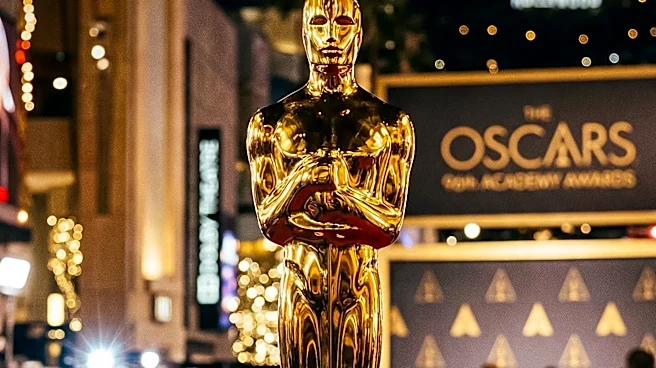
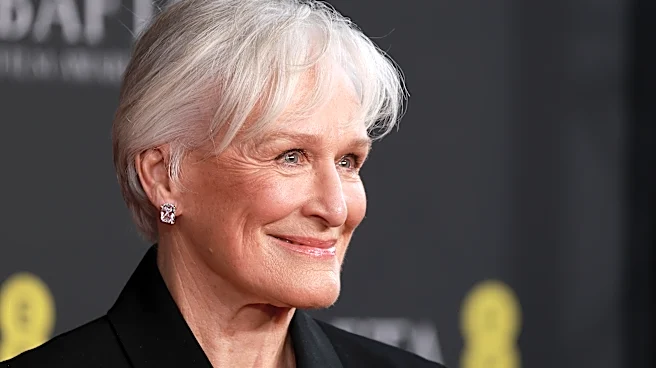
During a recent appearance on The Graham Norton Show, actor and producer Michael Douglas expressed his long-held belief that Glenn Close should have won the Best Actress Oscar in 1988 for her role in 'Fatal Attraction' instead of Cher, who won for 'Moonstruck'.
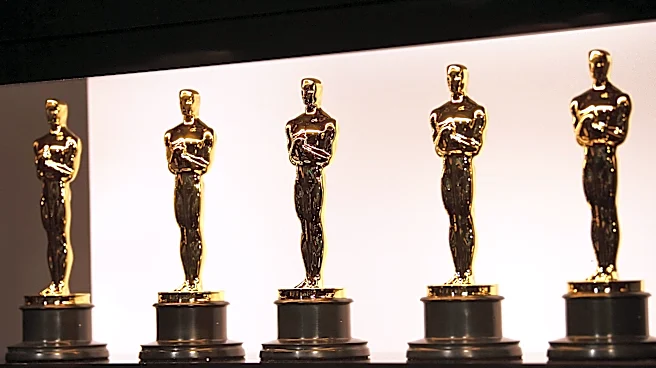
Douglas stated that Close's performance in 'Fatal Attraction' was one of 'the greatest performances of all time.' Close, who was also present on the show, is set to receive an Honorary Oscar at the Governors Awards, marking her first Oscar despite eight career nominations. She humorously suggested the Academy might be trying to alleviate guilt. Cher's spokesperson, however, indicated that Cher 'adores Michael Douglas' and did not take his comments negatively. This discussion comes nearly 40 years after the 1988 Academy Awards ceremony.
Why It's Important?
This commentary from a prominent Hollywood figure like Michael Douglas reignites a decades-old debate within the film industry regarding Oscar selections and perceived snubs. It highlights the subjective nature of awards and how certain performances can resonate differently with individuals, even years later. For Glenn Close, it underscores a career marked by critical acclaim but a lack of competitive Oscar wins, a narrative common for many respected actors. For Cher, it serves as a reminder of a significant career achievement, even as its validity is questioned by peers. Such discussions can influence public perception of past awards, potentially leading to re-evaluations of cinematic history and the criteria used for recognizing excellence in acting.
What's Next?
While Michael Douglas's comments are unlikely to alter the historical outcome of the 1988 Oscars, they may spark renewed interest in both 'Fatal Attraction' and 'Moonstruck', potentially leading to re-watchings and critical re-assessments by audiences and film enthusiasts. The upcoming Governors Awards, where Glenn Close will receive her Honorary Oscar, will provide another platform for reflection on her extensive career and contributions to cinema. This event could further amplify discussions about her past nominations and the broader recognition of her talent within the industry. Douglas's recent memoir, 'One Helluva Ride,' which also contains revelations about his career and personal life, continues to keep him in the public eye, potentially drawing more attention to his opinions on Hollywood history.
Beyond the Headlines
The enduring nature of this debate, nearly four decades later, speaks to the lasting impact of cinematic performances and the emotional investment audiences and industry professionals place in awards like the Oscars. It touches upon the broader theme of legacy in Hollywood and how actors' careers are often defined by both their work and the accolades they receive. The discussion also subtly highlights the pressure and scrutiny faced by awards committees, whose decisions can be debated for generations. Furthermore, it offers a glimpse into the camaraderie and candidness that can exist among long-standing figures in the entertainment industry, even when expressing differing opinions on historical events.