





What's Happening?
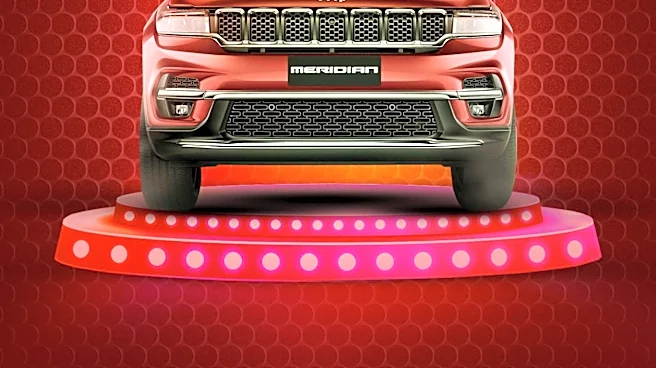
Jeep and Marvel Studios have initiated a yearlong co-branded marketing campaign titled 'A Jeep 4x4 for Any Universe,' leading up to the theatrical release of Marvel Studios’ 'Avengers: Doomsday' on December 18. This extensive 360-degree campaign encompasses
national and dealership support across various platforms, including broadcast, social media, websites, CRM, and experiential events in both the U.S. and global markets. The collaboration integrates legendary Marvel characters such as Captain America, the Human Torch, H.E.R.B.I.E., and Nightcrawler. A notable 'signature moment' features The Thing driving a Jeep Wrangler, symbolizing the convergence of a formidable Marvel hero and Jeep's iconic 4x4. The campaign began in May with 'Origin Story,' which introduced the 2026 Jeep Wrangler America250 special edition, complete with a Captain America shield tire cover and a limited-edition Marvel comic book cover. Following this, 'The Original Superheroes' segment highlighted U.S. military veterans driving various Jeep models, further expanding the campaign's narrative.
Why It's Important?
This collaboration signifies a strategic marketing move for both Jeep, a brand under Stellantis, and Marvel Studios. For Jeep, it's an effort to re-establish its market presence in America and globally, leveraging the immense popularity and broad appeal of the Marvel Cinematic Universe. By associating its vehicles with iconic superheroes and their multiversal adventures, Jeep aims to enhance brand visibility, attract new demographics, and reinforce its image of rugged capability and adventure. For Marvel Studios, the partnership provides extensive promotional reach for 'Avengers: Doomsday,' ensuring widespread awareness and anticipation for the film's release. The integration of Jeep vehicles into the film's universe and marketing materials creates a symbiotic relationship that benefits both entities by tapping into existing fan bases and generating significant buzz. This type of cross-industry collaboration is crucial in today's competitive entertainment and automotive markets, offering a powerful way to engage consumers and drive sales and viewership.
What's Next?
The 'A Jeep 4x4 for Any Universe' campaign will culminate with the release of Marvel Studios’ 'Avengers: Doomsday' on December 18. The ongoing marketing efforts are expected to intensify as the release date approaches, with continued broadcast, social media, and experiential events. The campaign's success will likely be measured by its impact on Jeep's sales figures and the box office performance of 'Avengers: Doomsday.' The simultaneous release of 'Avengers: Doomsday' and Warner Bros. Pictures' 'Dune: Part Three' has created a 'Dunesday' phenomenon, drawing comparisons to the 'Barbenheimer' event of 2023. The performance of these films will be closely watched to see if this new dual release can replicate or surpass the cultural and commercial impact of its predecessor. Future collaborations between automotive brands and major film franchises may be influenced by the outcomes of this campaign.
Beyond the Headlines
The 'A Jeep 4x4 for Any Universe' campaign highlights a growing trend of deep integration between entertainment franchises and consumer brands, moving beyond simple product placement to co-created narratives and shared universes. This strategy blurs the lines between advertising and storytelling, creating immersive experiences for consumers. The ethical implications of such extensive brand integration include questions about the commercialization of beloved fictional worlds and the potential for consumer fatigue if not executed authentically. Legally, these collaborations involve complex intellectual property agreements and licensing deals. Culturally, they reflect the power of pop culture to influence consumer choices and shape brand perceptions. The long-term shift could see more brands becoming integral parts of fictional universes, offering new avenues for marketing and fan engagement, but also posing challenges in maintaining creative integrity and avoiding overt commercialism.