





What's Happening?
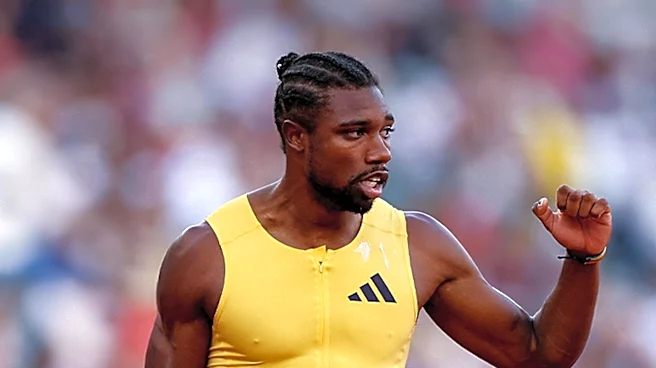
American Olympic sprinter Noah Lyles has gained recognition for his distinctive approach to pre-race preparation, notably his use of Yu-Gi-Oh cards before competing. This ritual, observed at events like the Olympic Trials, contrasts with the intense demeanor
often adopted by his competitors. Lyles openly embraces his unique methods, stating that having fun and being authentic helps him manage pressure and perform at his best. He attributes his success, including becoming an Olympic champion, to this philosophy, encouraging younger athletes to embrace their individuality. This strategy aligns with the concept of the Individual Zone of Optimal Functioning (IZOF), a theory developed by Yuri Hanin, which posits that each individual has a unique mental state conducive to peak performance, rather than a single universal ideal.
Why It's Important?
Lyles's success highlights a significant shift in understanding athletic psychology, moving away from a one-size-fits-all approach to mental preparation. His public embrace of unconventional rituals challenges traditional notions of seriousness and intensity in elite sports, suggesting that personal enjoyment and authenticity can be powerful performance enhancers. This could influence how coaches and sports psychologists approach athlete development, encouraging more personalized mental strategies. For younger athletes, Lyles serves as a role model, demonstrating that being true to oneself, even if perceived as 'corny,' can lead to top-tier achievement. This perspective may foster a more inclusive and less rigid environment in competitive sports, where individual expression is valued as a component of success.
What's Next?
The continued success of athletes like Lyles, who openly adopt unique pre-performance routines, may lead to broader acceptance and integration of individualized psychological strategies in sports training. We might see more research into the IZOF model and its practical applications across various athletic disciplines. Sports organizations and coaching programs could begin to incorporate more flexible and personalized mental preparation techniques, moving beyond standardized approaches. This could also spark further discussions among athletes, coaches, and the media about the role of personality and authenticity in high-stakes competitions, potentially inspiring more athletes to share and embrace their own distinct methods for achieving peak performance.
Beyond the Headlines
Lyles's approach extends beyond mere athletic performance; it touches upon broader themes of self-acceptance and the courage to defy conventional norms. In a society that often pressures individuals to conform, his public display of individuality, even in a highly competitive arena, sends a powerful message about the value of authenticity. This could have cultural implications, encouraging people in various fields to explore and embrace what makes them unique, rather than suppressing it to fit in. It also raises questions about the psychological toll of constant pressure to maintain a certain image in public life, suggesting that genuine self-expression might be a healthier and more effective path to success and well-being.