







What's Happening?
Fashion manufacturers, particularly in South and Southeast Asia, are facing significant challenges due to extreme heat, which is affecting their workforce and production capabilities. According to a report by New York University's Stern Business School,
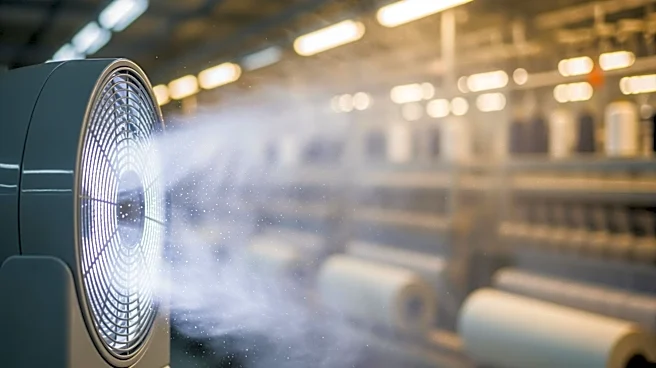
heat stress is emerging as a major threat to the fashion industry's workforce, leading to increased absenteeism and reduced product quality. In response, manufacturers are taking proactive steps to mitigate the impact of high temperatures. These measures include redesigning factory layouts, improving ventilation, and investing in cooling technologies. For instance, Epic Group, a major garment manufacturer, has developed a net-zero model factory in Odisha, India, designed to operate efficiently even in temperatures exceeding 120°F. This facility incorporates high-performance insulation and microclimate management techniques to maintain a cooler environment for its workers.
Why It's Important?
The efforts by fashion manufacturers to address extreme heat are crucial for maintaining productivity and ensuring worker safety. As climate change continues to exacerbate heat conditions, the fashion industry must adapt to protect its workforce and sustain operations. The implementation of cooling measures not only helps in reducing health risks for workers but also enhances productivity by minimizing heat-related disruptions. This shift towards climate adaptation highlights the need for industry-wide collaboration and investment in sustainable practices. By prioritizing worker comfort and safety, manufacturers can retain their workforce and avoid significant slowdowns in production, which is vital for meeting global demand and maintaining economic stability.
What's Next?
As manufacturers continue to adapt to extreme heat, there is a growing need for industry-wide standards and policies to address heat stress. Brands and manufacturers are encouraged to establish mandatory heat-risk data collection and reporting, as well as develop standalone policies on extreme heat adaptation. Collaboration among industry stakeholders will be essential to drive deeper investments in cooling and ventilation technologies. Additionally, manufacturers may seek financial support to implement these changes, as current industry financing primarily focuses on reducing greenhouse gas emissions. The ongoing dialogue among manufacturers, as facilitated by groups like the Fashion Producer Collective, will play a critical role in sharing best practices and developing effective solutions.
Beyond the Headlines
The adaptation to extreme heat in the fashion industry also raises broader questions about sustainability and ethical labor practices. As manufacturers invest in cooling technologies, there is an opportunity to integrate these efforts with broader sustainability goals, such as reducing energy consumption and minimizing environmental impact. Furthermore, the focus on worker safety and comfort underscores the importance of ethical labor practices in the global supply chain. By addressing heat stress, manufacturers can improve working conditions and contribute to a more sustainable and equitable industry. This shift may also influence consumer perceptions and demand for ethically produced fashion products.