








What's Happening?
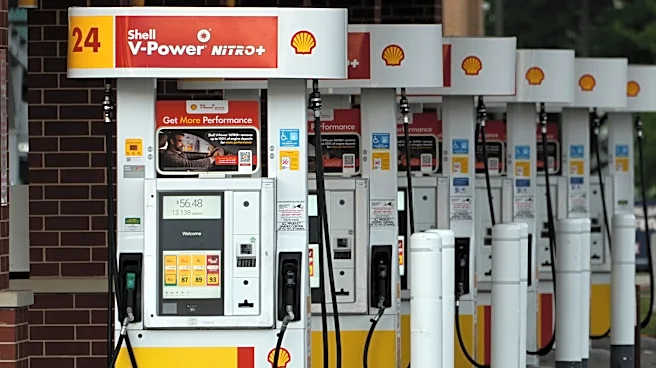
U.S. inflation cooled in June as gas prices fell, providing some relief to consumers. The Consumer Price Index (CPI) dropped 0.4% from May, marking the largest monthly decline in four years. On a yearly basis, inflation decreased to 3.5%, down from 4.2%
in May. However, geopolitical tensions in the Middle East, particularly renewed military actions in the Strait of Hormuz, have led to a rise in oil prices, which could limit the progress in controlling inflation. Core inflation, excluding food and energy, remained unchanged, indicating persistent underlying price pressures.
Why It's Important?
The temporary easing of inflation provides some relief, but the underlying pressures remain a concern. Rising oil prices due to geopolitical tensions could lead to higher energy costs, impacting consumer spending and economic growth. The Federal Reserve, focused on achieving its 2% inflation target, may face challenges in managing inflation if energy prices continue to rise. The situation underscores the complexity of managing inflation in a volatile global environment, with potential implications for monetary policy and economic stability.
What's Next?
The Federal Reserve will continue to monitor inflation trends closely, particularly the impact of rising energy prices. Policymakers may need to adjust their strategies if inflationary pressures persist, potentially considering interest rate hikes to curb inflation. The geopolitical situation, particularly in the Middle East, will also play a crucial role in determining future energy prices and inflation trends. Stakeholders, including businesses and consumers, will need to prepare for potential fluctuations in prices and economic conditions.