




What's Happening?
Industry leaders and officials from Australia, Germany, and Scotland convened at the Renewable Energy India (REI) Expo & The Battery Show India (TBSI) on October 23 to discuss cooperation with India on battery manufacturing, critical minerals, and technology.
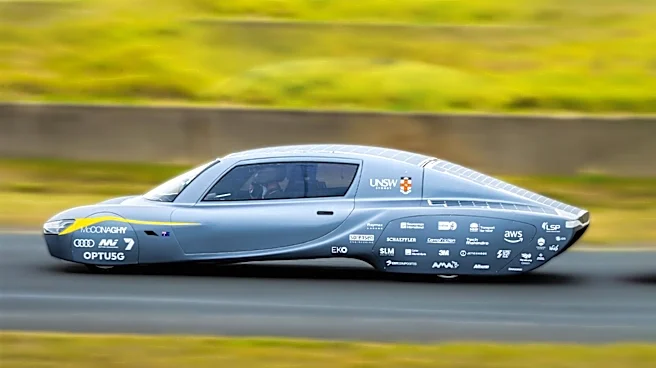
The discussions aimed to bolster India's domestic battery manufacturing capabilities and strengthen the supply chain for its electric vehicle (EV) industry. Australia, a major producer of lithium, cobalt, and rare earth resources, identified battery manufacturing and EVs as key areas for collaboration. Philip Green, Australia’s High Commissioner to India, highlighted the potential to combine Australia’s engineering expertise and mineral resources with India’s manufacturing strength. Anandi Iyer, Director of Fraunhofer Office in India, noted opportunities for India and Germany to collaborate in battery research, power electronics, advanced engineering, and industrial automation. Scotland's First Minister John Swinney also expressed interest in combining Scottish technological expertise with India’s manufacturing scale and market potential.
Why It's Important?
This international collaboration is crucial for India's ambition to become a global leader in electric vehicle manufacturing and renewable energy. By securing critical minerals and advanced battery technology through partnerships with countries like Australia and Germany, India can reduce its reliance on imports and build a more resilient domestic supply chain. The projected growth of India's renewable energy market to 486 GW by 2030 and its battery storage sector to exceed USD 8.5 billion by 2031 underscores the economic significance of these discussions. For the U.S., these developments could impact global supply chains for critical minerals and EV components, potentially influencing trade dynamics and investment opportunities in the renewable energy sector. A stronger Indian EV market could also create new avenues for U.S. companies involved in related technologies or infrastructure.
What's Next?
The discussions at the REI Expo are expected to pave the way for more concrete agreements and investments in battery manufacturing and critical mineral supply chains. While no specific new investments or agreements involving individual EV manufacturers were announced, the ongoing dialogue suggests future collaborations. India will likely continue to seek partnerships to enhance its technological self-reliance while integrating into global supply chains. The focus will be on translating research into commercially viable solutions and building a resilient clean energy ecosystem through continued investment in manufacturing, energy storage, grid infrastructure, research, and skilled talent. The outcomes of these discussions could influence policy decisions in India regarding foreign investment and technology transfer in the renewable energy sector.
Beyond the Headlines
The emphasis on 'technological self-reliance' without 'working in isolation' highlights a nuanced approach to national development, balancing domestic capabilities with international cooperation. This strategy could serve as a model for other developing nations aiming to build advanced manufacturing sectors. The ethical implications of critical mineral extraction, particularly regarding environmental sustainability and labor practices, will likely become more prominent as demand increases. Furthermore, the geopolitical landscape surrounding access to rare earth elements and other critical minerals could shift, with new alliances forming to secure these vital resources. The long-term success of these partnerships will depend on equitable technology transfer, shared intellectual property, and mutually beneficial economic arrangements, potentially setting new standards for international collaboration in green technologies.