





What's Happening?
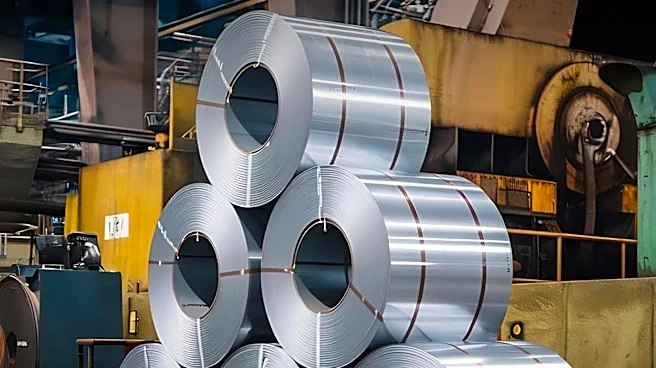
Retail investors are closely observing U.S. steel stocks due to the re-emergence of tariffs as a significant factor influencing the industry. The current Section 232 tariffs maintain a 50% duty on imported primary steel, while adjusting coverage for some
downstream products. This policy creates an environment where domestic steel producers may gain market share as customers reconsider onshore sourcing. Companies like Metallus, which specializes in U.S. alloy and carbon steel production, are seen as direct beneficiaries of these tariffs. Similarly, SunCoke Energy, with its cokemaking plants and industrial services supporting domestic steelmakers, is also tightly linked to this tariff-driven theme. The impact of these tariffs on pricing power and margins for these companies is a key operational swing factor that investors are analyzing.
Why It's Important?
The renewed focus on tariffs in the U.S. steel industry has significant implications for the domestic economy and specific sectors. Tariffs can lead to higher input costs for some industries but can also create pricing power and new opportunities for others, particularly domestic producers. For U.S. steel companies, these tariffs can provide a competitive advantage by making imported steel more expensive, thereby encouraging domestic production and sourcing. This can lead to increased demand for U.S.-made steel, potentially boosting revenues and profitability for companies like Metallus and SunCoke Energy. The shift towards onshore sourcing can also strengthen the domestic manufacturing base and create jobs. However, the long-term effects of tariffs can be complex, potentially leading to retaliatory measures from other countries or increased costs for industries that rely on steel as an input, which could ultimately affect consumer prices.
What's Next?
The future trajectory of U.S. steel stocks will largely depend on the stability and evolution of tariff policies. Investors will continue to monitor any shifts in policy momentum, as changes to import duties could significantly alter the competitive landscape. Companies like Metallus and SunCoke Energy will need to demonstrate how they can translate the tariff-induced advantage into sustainable pricing power and improved margins. The analyst narrative suggests that the impact of tariffs on Metallus's earnings quality will hinge on key operational factors, including contract timing and the company's ability to capitalize on increased onshore sourcing. For SunCoke Energy, its continued success will be tied to the steady demand from domestic steelmakers, which is directly influenced by tariff protection. The broader market will also be watching for any signs of how these tariffs affect inflation and international trade relations.
Beyond the Headlines
The discussion around steel tariffs extends beyond immediate stock performance, touching upon broader themes of economic nationalism, supply chain resilience, and industrial policy. The emphasis on onshore sourcing, driven by tariffs, reflects a strategic effort to reduce reliance on foreign imports and bolster domestic industries, particularly those deemed critical for national security or economic stability. This approach can lead to a more localized and potentially more secure supply chain, but it may also come at the cost of higher prices for consumers and reduced global trade efficiency. The long-term implications include potential shifts in global manufacturing hubs and the re-evaluation of international trade agreements. The focus on tariffs also highlights the ongoing debate about the role of government intervention in shaping market dynamics and protecting domestic industries from foreign competition, a debate that has significant political and economic dimensions.