





What's Happening?
Dental practices are increasingly targeted by cybercriminals, who are leveraging AI to create sophisticated phishing emails and exploit network vulnerabilities. To counter these threats, practices are strongly advised to implement Multi-Factor Authentication
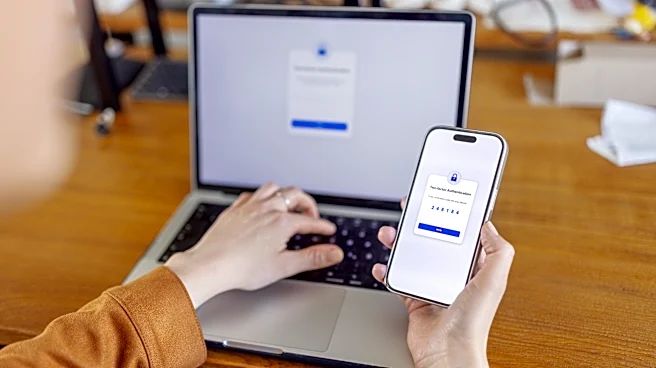
(MFA) and strengthen email security protocols. MFA, which requires users to verify their identity in more than one way, is crucial because stolen or guessed passwords are often sufficient for hackers to access sensitive patient data and payment information. Dental Intelligence, a practice management software, offers MFA as an optional feature, emphasizing that its effectiveness depends on user activation. Additionally, practices should ask their IT providers to set up SPF, DKIM, and DMARC on their email domains to authenticate senders and run regular phishing awareness training for their teams. These measures are designed to close security gaps and protect against evolving cyberattack methods, including flawless phishing attempts and cloned voices used in social engineering.
Why It's Important?
The rise of AI-powered cyberattacks makes dental practices particularly vulnerable due to the valuable patient data and payment access they possess. A breach can lead to severe financial penalties, loss of patient trust, and significant operational disruption. Implementing MFA adds a critical layer of security, making it much harder for attackers to gain unauthorized access even if they obtain a password. The recommendation for SPF, DKIM, and DMARC email authentication is vital for preventing email spoofing and ensuring that legitimate communications are not mistaken for phishing attempts. Regular phishing awareness training is equally important, as human error remains a primary vector for cyberattacks. By adopting these security measures, dental practices can significantly reduce their risk exposure, protect sensitive information, and maintain compliance with regulations like HIPAA, which mandates annual security risk analyses.
What's Next?
Dental practices should prioritize enabling MFA within their Dental Intelligence accounts and other critical systems. Admin-level users are responsible for activating these settings, ensuring all team members are enrolled. Beyond MFA, practices need to work with their IT providers to configure SPF, DKIM, and DMARC for their email domains. Continuous security awareness training for staff, focusing on identifying sophisticated phishing and social engineering tactics, is also essential. This training should be ongoing, not a one-time event, to keep pace with evolving threats. Practices should also adopt other best practices, such as using unique logins for each team member, employing password managers, protecting all office computers with anti-malware and updates, and securing network infrastructure with business-grade firewalls and custom Wi-Fi passwords for business systems. Regular backups, with tested restore capabilities, are also critical for ransomware protection.
Beyond the Headlines
The emphasis on MFA and advanced email security protocols for dental practices reflects a broader trend in cybersecurity: the need for proactive, multi-layered defenses against increasingly sophisticated threats. The shift from simple phishing attempts to AI-generated, flawless attacks and cloned voices means that traditional security awareness alone is no longer sufficient. Organizations, especially those handling sensitive data, must adopt a 'defense-in-depth' strategy that combines technical controls with continuous employee education. The challenge lies not only in implementing these technologies but also in fostering a culture of security where every employee understands their role in protecting the practice. This includes verifying suspicious requests through trusted channels and reporting potential incidents promptly. The integration of security features into practice management software, like Dental Intelligence, also highlights the growing responsibility of software vendors to provide robust security tools and guide users in their effective implementation.