






What's Happening?
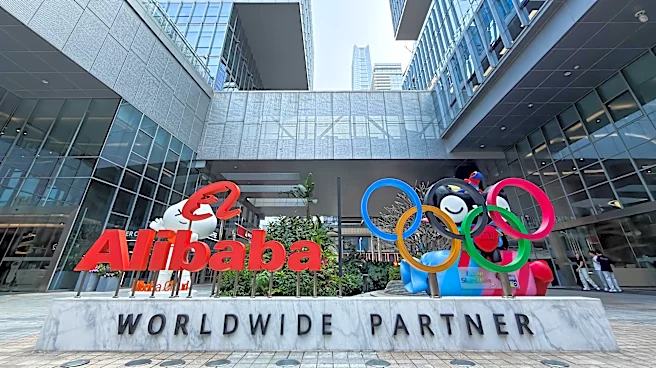
The U.S. Commerce Department has formally added Apex Enterprise Solutions, a Singaporean subsidiary of Alibaba Group, to its entity list. This designation restricts Apex Enterprise Solutions from purchasing AI chips and other advanced technology without
a U.S. government license. The Trump administration's move also included several entities affiliated with Megaspeed International. Alibaba has stated that this action is 'erroneous,' asserting that Apex Enterprise Solutions has never diverted advanced computing chips subject to U.S. export restrictions. An Alibaba spokesperson indicated the company will pursue all legal avenues to protect its rights and reputation. This blacklisting comes as Alibaba is rapidly expanding its AI initiatives, with expectations for AI-related revenue growth to recover by 2028 after a projected brief slowdown next year.
Why It's Important?
This action by the U.S. Commerce Department has significant implications for Alibaba's AI ambitions and the broader U.S.-China technology landscape. By restricting access to advanced AI chips, the U.S. government aims to curb the technological advancement of companies perceived as threats to national security. For Alibaba, this could hinder its ability to develop and deploy cutting-edge AI technologies, potentially impacting its competitiveness in the global AI market. U.S. chip manufacturers and technology providers could also be affected by reduced sales to blacklisted entities. This move underscores the ongoing geopolitical tensions and the U.S. strategy to control the flow of critical technologies to China, affecting both U.S. and international businesses operating within this complex regulatory environment.
What's Next?
Alibaba is expected to challenge the U.S. Commerce Department's decision through legal avenues, seeking to have Apex Enterprise Solutions removed from the entity list. The outcome of these legal efforts will be crucial for the subsidiary's ability to access essential AI components. Concurrently, Alibaba will likely continue to invest in its in-house semiconductor development to mitigate the long-term impact of U.S. export restrictions. The company's strategy to achieve AI-related revenue growth by 2028 will depend heavily on its capacity to innovate and secure necessary technological resources despite these restrictions. The U.S. government may continue to monitor and potentially expand its entity list, further shaping the landscape for technology trade between the two nations.
Beyond the Headlines
The blacklisting of Alibaba's subsidiary highlights a deeper trend of technological decoupling between the U.S. and China. This move is not merely about a single company but reflects a broader U.S. policy aimed at safeguarding its technological leadership and national security interests. The Pentagon's previous accusations against major Chinese companies, including Alibaba, for allegedly supporting the Chinese military, underscore the strategic nature of these actions. This ongoing tension could lead to a more fragmented global technology ecosystem, where companies are forced to choose sides or develop parallel supply chains. The long-term implications include potential shifts in global innovation hubs, increased costs for technological development, and a re-evaluation of international business partnerships based on geopolitical alignments rather than purely economic considerations.