






What's Happening?
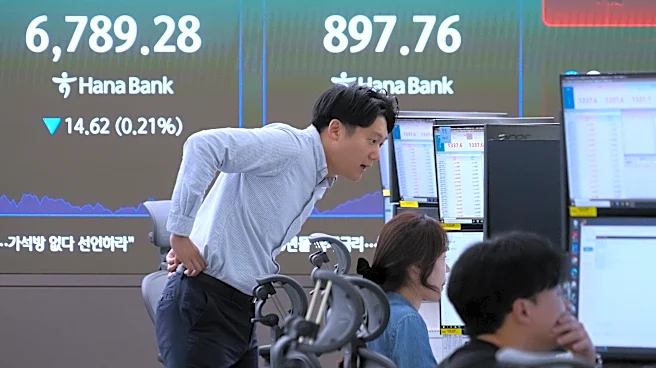
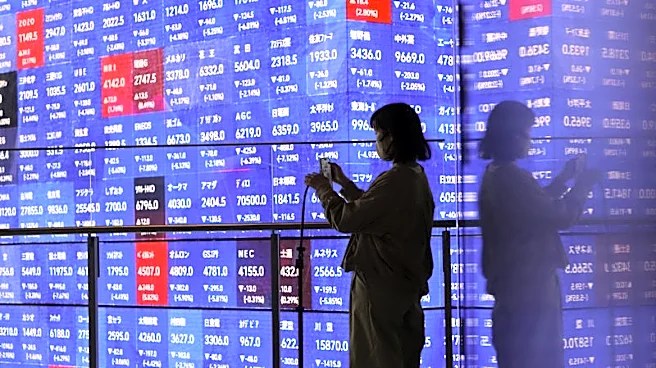
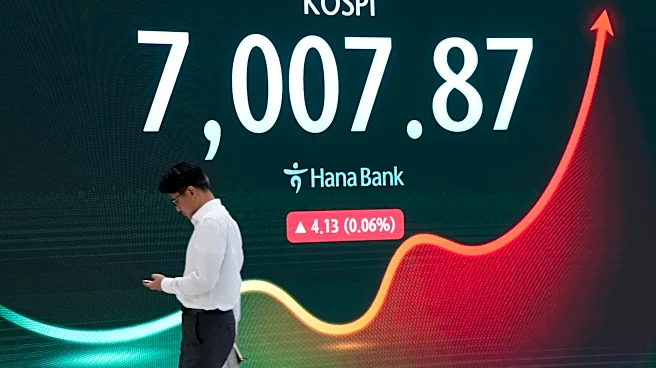
The CEOs of Japan's two largest securities firms, Nomura Holdings and Daiwa Securities Group, have expressed concerns that a potential reversal in artificial intelligence (AI) investment could pose a significant risk to the current stock market rally.
Speaking at a Nikkei event in Tokyo, Nomura CEO Kentaro Okuda stated that markets, stock prices, and corporate earnings are heavily driven by AI investment, and a shift in sentiment could lead to substantial risks. Daiwa CEO Akihiko Ogino echoed these sentiments, highlighting the potential for market participants to dramatically change their views, causing sharp swings in asset prices that could amplify economic impacts. Both executives projected continued growth for the Nikkei 225 Stock Average, with Ogino targeting 80,000 this year and Okuda aiming for 75,000 by year-end and over 80,000 by the end of 2027. The current rally in Japanese equities, trading near record highs, is attributed to AI investment, corporate governance reforms, and a return to inflation, which has also boosted profits for these securities firms.
Why It's Important?
The warnings from top executives at Nomura and Daiwa underscore a growing apprehension within the financial industry regarding the sustainability of the AI-driven market rally. This perspective is crucial for U.S. investors and policymakers as global markets are increasingly interconnected. A significant downturn in AI investment sentiment, as suggested, could trigger a broader market correction, impacting technology stocks and investment portfolios worldwide, including those in the U.S. The potential for rapid shifts in investor sentiment, as noted by Ogino, highlights the inherent volatility in sectors heavily reliant on speculative growth. Such a scenario could lead to a reallocation of capital, affecting valuations across various industries and potentially slowing economic growth if investor confidence erodes. For U.S. companies heavily invested in AI research and development, a global shift in investment could reduce funding opportunities and impact innovation timelines. Furthermore, any significant market instability originating from a major economic power like Japan could have ripple effects on U.S. financial stability and investor behavior.
What's Next?
In the immediate future, market participants will likely closely monitor indicators of AI investment sentiment and any shifts in public or regulatory attitudes towards AI and data centers, particularly in key markets like the U.S. The executives' remarks suggest that any signs of public opposition or regulatory scrutiny could trigger a re-evaluation of AI sector investments. Investors may begin to diversify portfolios away from heavily AI-dependent assets or increase their hedging strategies to mitigate potential risks. Financial institutions and analysts will likely conduct more rigorous stress tests on AI-exposed portfolios. Furthermore, central banks and financial regulators globally, including in the U.S., may increase their surveillance of market bubbles and systemic risks associated with concentrated investments in emerging technologies. The projected targets for the Nikkei 225 will be watched as a barometer for broader market confidence, with any failure to meet these projections potentially signaling a weakening in the AI-driven rally.
Beyond the Headlines
The concerns raised by Nomura and Daiwa CEOs point to a deeper, systemic vulnerability within modern financial markets: the rapid concentration of capital into a single, transformative technology. This phenomenon, while driving innovation and economic growth, also creates a monoculture of investment that can be highly susceptible to sudden shifts in perception or unforeseen external factors. The ethical and societal implications of AI, including job displacement, data privacy, and algorithmic bias, are increasingly becoming public discourse. Should these concerns translate into widespread public opposition or stringent regulatory frameworks, the economic model underpinning the current AI boom could be fundamentally challenged. This could lead to a re-evaluation of what constitutes sustainable technological growth versus speculative bubbles, prompting a broader discussion on responsible innovation and investment. The potential for market moves to amplify real-economy impacts also highlights the psychological dimension of financial markets, where collective sentiment can create self-fulfilling prophecies, irrespective of underlying economic fundamentals.