





What's Happening?
The Carboun Institute, the Middle East and North Africa (MENA) region's first independent climate and energy policy think tank, is seeking a China-MENA Research Fellow with a focus on the Central Asia Axis. This project aims to analyze the growing role
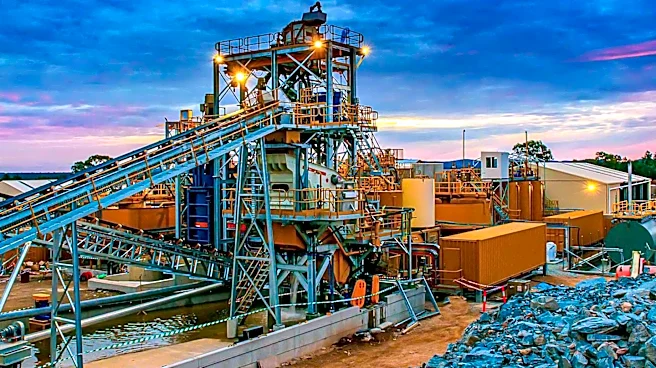
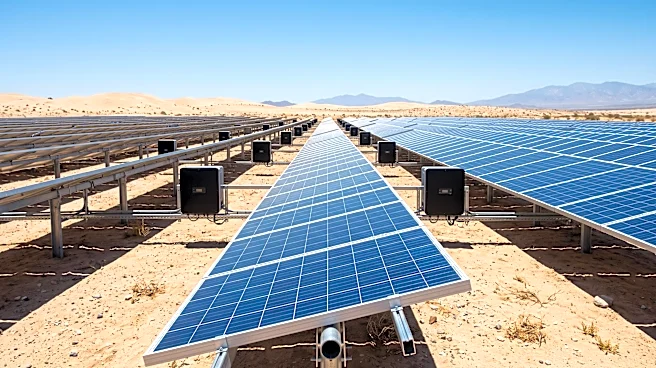
of China as a clean-energy investor and technology partner in MENA, and how MENA states are balancing these relationships during the energy transition. The research will also explore green industrialization, including critical-minerals value chains and trade corridors, and energy transition finance, particularly the allocation of Gulf sovereign capital. A central analytical question for the project is how the Iran war is reshaping the China-MENA relationship and accelerating the energy transition and electrification.
Why It's Important?
This research is crucial for understanding the evolving geopolitical landscape and economic shifts impacting the U.S. and its allies. The deepening of Chinese clean-tech capital and supply chains in MENA could alter global energy dynamics and trade relationships, potentially affecting U.S. influence in the region. The project's focus on green industrialization and critical minerals highlights the strategic importance of these resources for the global energy transition, where competition between major powers is intensifying. The allocation of Gulf sovereign capital towards energy transition finance also signifies a significant shift in investment patterns, which could create new economic opportunities or challenges for U.S. businesses and policy interests. The impact of the Iran war on these dynamics further complicates the geopolitical calculus, making this research vital for informed policy-making.
What's Next?
The Carboun Institute's project will build on previous research, expanding along two tracks: shifting research into key triangulations and moving towards a smaller set of durable institutional relationships and one high-leverage convening. The research will continue to examine whether the Iran war is accelerating Chinese clean-tech capital, technology, and infrastructure flows into the Gulf, potentially pulling the region back towards hydrocarbon-anchored Chinese engagement or leading to a combination of both across different sectors. The findings from this research are expected to inform policy analysis and advocacy, contributing to a deeper understanding of the complex interactions between geopolitics, energy transition, and economic development in the MENA region and its implications for global stakeholders.
Beyond the Headlines
The Carboun Institute's initiative delves into the intricate web of economic and political dependencies being forged in the wake of the global energy transition. The increasing reliance of MENA states on Chinese clean-tech supply chains raises questions about technological sovereignty and diversification strategies. This could lead to a re-evaluation of existing alliances and trade agreements, as countries seek to secure their positions in the new energy economy. The ethical implications of resource extraction for critical minerals and the environmental impact of green industrialization will also be under scrutiny. Furthermore, the project's focus on the Iran war's influence underscores how regional conflicts can profoundly alter global economic and environmental trajectories, necessitating a holistic approach to policy development that considers both immediate geopolitical pressures and long-term sustainability goals.