


What's Happening?
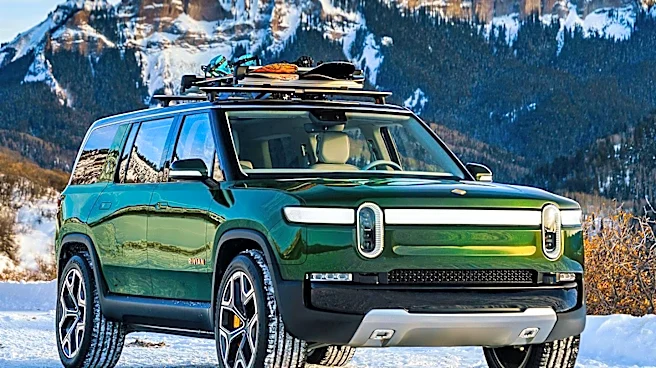
The Rivian R2 has received significant praise for its exceptional ride quality and versatile performance across various terrains, following extensive real-world testing. Reviewers highlighted the vehicle's surprisingly compliant suspension, which effectively
absorbs impacts on gravel, rocks, sand, and freeways, providing a remarkably smooth and comfortable ride. This level of comfort is compared to high-performance off-road vehicles like the Ford F-150 Raptor, yet the R2 maintains precise and predictable handling in sharp corners. Despite utilizing a conventional suspension setup—MacPherson struts upfront and a multi-link rear end with conventional springs and electronically adjustable dampers—the R2 achieves this impressive balance without complex active suspension systems found in its R1T and R1S siblings or luxury competitors. While its technology, such as charging speed, is noted as good for a 400-volt platform but not groundbreaking, and its handling is not on par with a Model Y Performance, the R2's overall package is considered unique for its broad capability.
Why It's Important?
The Rivian R2's ability to deliver exceptional ride quality and versatile performance with a conventional suspension system is a significant engineering achievement. This demonstrates that advanced tuning and design can yield premium driving experiences without necessarily relying on more complex and expensive active suspension technologies. For consumers, this could translate into a more accessible yet highly capable electric SUV that excels in both off-road adventures and daily commuting. This balance of comfort and handling positions the R2 as a strong contender in the competitive EV market, particularly against models like the Tesla Model Y, by offering a distinct adventure-oriented appeal. The positive reception of its ride quality could also influence future automotive engineering trends, encouraging manufacturers to focus more on optimizing conventional suspension systems for enhanced performance and comfort, potentially leading to more cost-effective yet high-performing vehicles.
What's Next?
The positive reception of the Rivian R2's ride quality and versatility is likely to boost consumer interest and pre-orders for the vehicle. Rivian will likely leverage these strong reviews in its marketing campaigns to highlight the R2's unique blend of comfort and capability. The company may also continue to refine its software offerings, as noted by the positive experience with the Halloween Update and Rivian Assistant, to further enhance the user experience and maintain a competitive edge. As production scales, Rivian will need to ensure consistent quality and performance to meet demand and maintain its reputation. Future updates might focus on improving charging infrastructure integration and expanding the vehicle's feature set to solidify its position in the electric SUV segment. The R2's success could also pave the way for Rivian to introduce similar suspension tuning philosophies in future models.
Beyond the Headlines
The Rivian R2's engineering success in achieving superior ride quality with conventional components challenges the notion that advanced, complex, and often expensive active suspension systems are always necessary for premium performance. This could lead to a re-evaluation of suspension design philosophies across the automotive industry, potentially inspiring more innovation in passive and semi-active systems. From a consumer perspective, it democratizes high-quality driving dynamics, making them accessible in a broader range of vehicles. Furthermore, the R2's strong appeal to 'young California types with outdoor hobbies' highlights a growing market segment that values adventure-ready EVs with refined on-road manners. This demographic focus could influence future product development strategies for other EV manufacturers, pushing them to create vehicles that cater to specific lifestyle needs beyond just efficiency and range, fostering a more diverse and specialized EV market.