




What's Happening?
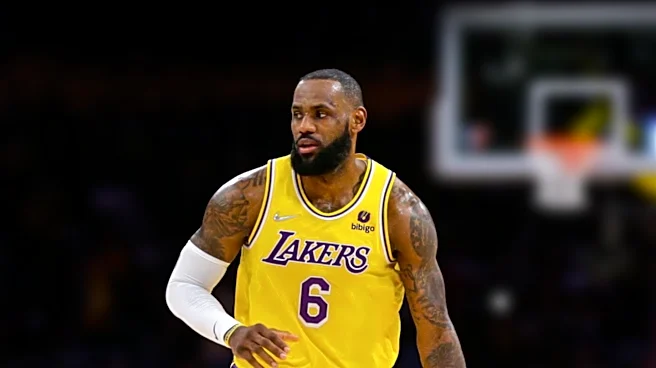
LeBron James believes Victor Wembanyama has a strong chance to win the NBA MVP award this season. However, two-time MVP winner Steve Nash has expressed a significant concern regarding Wembanyama's case. During an episode of the 'Mind the Game' podcast,
Nash acknowledged Wembanyama's exceptional two-way impact but questioned his ability to consistently take over games offensively, particularly in crucial late-game situations. Nash highlighted that traditional MVP candidates are often defined by their role as 'closers' who consistently score decisive baskets at the end of games. While Wembanyama's overall influence on the game is undeniable, Nash's concern centers on whether he is consistently the primary offensive option in clutch moments. This discussion arose as Nash asked James if the 2026-27 season could be Wembanyama's MVP year, to which James responded affirmatively, stating he saw no reason why not. The conversation delved into historical MVP winners and their closing abilities, with Nash suggesting that Wembanyama's defensive dominance, while impactful, might not align with the traditional offensive closing role expected of an MVP.
Why It's Important?
This discussion between LeBron James and Steve Nash is important because it highlights a fundamental debate in how NBA MVP candidates are evaluated, particularly in an era where player impact extends beyond traditional scoring metrics. Nash's concern about Wembanyama's 'closing' ability challenges the conventional wisdom that an MVP must be the primary offensive threat in clutch situations. This conversation could influence how voters perceive Wembanyama's candidacy, potentially shifting the focus from solely offensive output to a more holistic view of a player's impact, including defensive prowess and overall game-changing presence. If Wembanyama were to win MVP without consistently being the primary late-game scorer, it could set a new precedent for future MVP considerations, emphasizing defensive dominance and overall influence over traditional offensive closing statistics. This could benefit players who, like Wembanyama, significantly alter game outcomes through their defensive capabilities and broader impact, even if they are not always taking the final shot. Conversely, if the traditional 'closer' narrative prevails, it might pressure Wembanyama and the Spurs to develop his offensive closing game further to secure future MVP honors.
What's Next?
The ongoing debate about Victor Wembanyama's MVP candidacy, particularly concerning his role as a 'closer,' will likely continue to be a significant talking point throughout the NBA season. As Wembanyama continues to play, analysts and fans will closely scrutinize his performance in late-game situations, both offensively and defensively. The San Antonio Spurs' strategy in clutch moments, and whether Wembanyama is consistently given opportunities to be the primary offensive option, will be key. If Wembanyama demonstrates an increased ability to take over games offensively in crucial moments, it would directly address Steve Nash's concern and strengthen his MVP case. Conversely, if the Spurs continue to distribute late-game offensive responsibilities among multiple players, the debate about his 'closing' ability will persist. The league's MVP voters will ultimately have to weigh Wembanyama's extraordinary two-way impact against the traditional criteria, including clutch scoring, when casting their ballots. This discussion could also prompt a broader re-evaluation of MVP criteria within the NBA community, potentially leading to a more nuanced understanding of what constitutes an 'MVP-caliber' season.
Beyond the Headlines
The conversation surrounding Victor Wembanyama's MVP potential and Steve Nash's concerns delves into a deeper philosophical question about the definition of 'most valuable player' in basketball. It challenges the long-held notion that an MVP must primarily be an offensive juggernaut who consistently delivers the decisive points. Wembanyama's unique skill set, particularly his unprecedented defensive impact and ability to alter possessions without touching the ball, forces a re-evaluation of what constitutes 'value.' This discussion highlights the evolving nature of basketball, where advanced analytics are increasingly used to quantify impact beyond traditional box scores. The ethical implication lies in whether the league and its voters are prepared to recognize and reward a player whose value is derived from a less conventional, yet equally profound, influence on the game. It also touches on the cultural aspect of basketball, where the 'closer' narrative is deeply ingrained in fan perception and media storytelling. A shift in MVP criteria to embrace players like Wembanyama could signify a maturation in how basketball greatness is perceived, moving beyond individual scoring heroics to acknowledge the multifaceted contributions that lead to team success. This could inspire future generations of players to develop a more comprehensive game, emphasizing both ends of the court.