







What's Happening?
The Salton Sea in Southern California is poised to become a significant domestic source of lithium, a critical component for electric vehicle batteries. General Motors has partnered with Controlled Thermal Resources to extract lithium from the geothermal
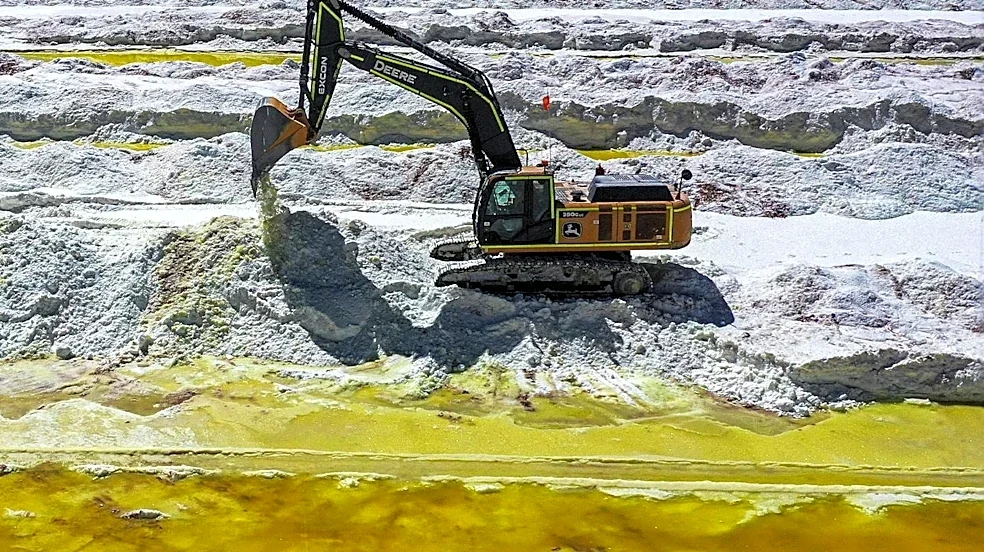
brines beneath the sea. This initiative aligns with GM's commitment to phase out gas-powered cars by 2035 and the broader U.S. push for energy independence and a green economy. The Salton Sea is estimated to hold between two to six million metric tons of lithium, potentially supplying all U.S. needs and allowing for exports. The extraction method, known as direct lithium extraction, is distinct from traditional open-pit or evaporation mining. It involves filtering lithium from hot saline brine, which is already brought to the surface by existing geothermal plants to generate electricity. After lithium extraction, the brine is reinjected into the ground, minimizing environmental impact compared to conventional mining practices. This development is seen as a potential economic boon for the Imperial Valley, an area historically plagued by environmental issues and economic hardship.
Why It's Important?
The emergence of the Salton Sea as a major lithium source is crucial for U.S. energy independence and its transition to a green economy. Currently, the U.S. imports over 95% of its lithium, making domestic production vital for national security and economic stability. The direct lithium extraction method at the Salton Sea offers a more environmentally friendly alternative to traditional mining, which often involves significant land disruption and water contamination in other countries. This could set a new standard for sustainable resource extraction. Furthermore, the project has the potential to revitalize the Imperial Valley, an area with high rates of childhood asthma due to dust from the shrinking Salton Sea. The influx of investment and the creation of well-paying jobs in geothermal energy and battery production could transform the region's economy and address long-standing environmental and social challenges. California's legislative mandate for a 100% renewable electrical grid by 2045 further underscores the importance of expanding geothermal energy and lithium storage batteries, making the Salton Sea a strategic asset.
What's Next?
In the coming years, lithium operations at the Salton Sea are expected to expand significantly, driven by an anticipated 800% rise in global demand for lithium over the next decade. The California Public Utilities Commission has requested an additional 1,000 megawatts of geothermal energy, which will likely necessitate doubling or tripling the number of geothermal power plants in the Salton Sea region. This expansion will, in turn, increase the potential for lithium extraction. If successful, the Salton Sea area could become a hub for large-scale domestic battery production, further reducing U.S. reliance on foreign supply chains. However, there remains a need to educate the public about the direct lithium extraction process to differentiate it from traditional, more environmentally damaging mining methods. Local residents and environmental groups will closely monitor the development to ensure that economic benefits are realized alongside effective environmental restoration efforts for the shrinking Salton Sea, which continues to pose health risks due to airborne dust.
Beyond the Headlines
The Salton Sea lithium project highlights a complex interplay between economic opportunity, environmental justice, and technological innovation. While the direct lithium extraction method promises a cleaner approach, the historical context of unfulfilled promises and environmental degradation in the Imperial Valley fosters understandable skepticism among local communities. The success of this venture could serve as a model for how resource-rich areas can transition to sustainable industries while addressing legacy environmental issues. Conversely, failure to deliver on economic and environmental promises could exacerbate existing distrust and deepen the challenges faced by the region. The project also underscores the ethical implications of global resource consumption, as developed nations seek to secure critical minerals domestically, potentially shifting environmental burdens if not managed responsibly. The Salton Sea's transformation could redefine the narrative of 'energy independence' to encompass not just fossil fuels, but also the critical minerals essential for a green future, emphasizing the need for integrated solutions that benefit both the economy and the environment.