








What's Happening?
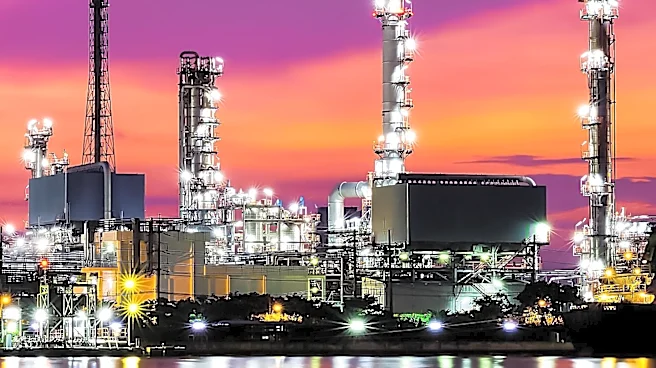
U.S. oil companies are investing in increasing refinery output and reactivating dormant plants to address global supply shortages exacerbated by conflicts in Russia and Iran. ExxonMobil Chief Executive Darren Woods reported that the company achieved "record
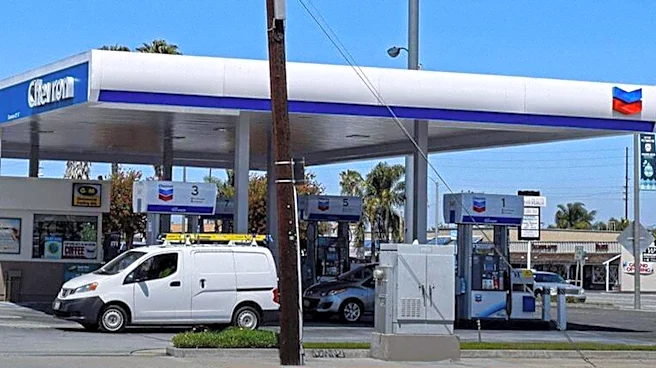
fuels utilization" outside the Middle East, including 100 percent crude utilization at its U.S. Gulf Coast refineries. This effort comes as U.S. gasoline prices remain above $4 per gallon and diesel prices are near all-time highs, exceeding $6 per gallon. Woods noted that the crunch in diesel and other refined products is due to various factors, including lost capacity in the Middle East and Russia from Ukrainian drone strikes, and a decline in Chinese refined output. Chevron also reported record throughput at its refineries, with CEO Mike Wirth stating the company is reinvesting to bring more energy to a supply-constrained market.
Why It's Important?
The push by U.S. oil firms to maximize refinery output is a direct response to persistent high fuel prices and global energy supply challenges, which have significant economic and political implications for the United States. Elevated gasoline and diesel prices impact consumers through increased transportation costs and contribute to inflationary pressures across various sectors. For businesses, particularly those reliant on logistics and transportation, high fuel costs can erode profit margins and necessitate price increases, potentially slowing economic growth. The efforts by ExxonMobil and Chevron to boost domestic refining capacity aim to mitigate these impacts by increasing the availability of refined products, thereby potentially stabilizing prices and reducing reliance on volatile international markets. This strategic focus on domestic production is crucial for U.S. energy security and economic stability.
What's Next?
Industry executives, including Darren Woods, anticipate that it will take well into next year, or possibly longer, for supply and demand to normalize in the refined products market. This suggests that high fuel prices and supply constraints could persist for an extended period, continuing to impact U.S. consumers and businesses. Companies like ExxonMobil and Chevron will likely continue their investments in refinery optimization and capacity expansion. The market will also be closely watching geopolitical developments, particularly the conflicts in Russia and Iran, as these remain significant variables affecting global crude and refined product availability. The long-term outlook for fuel prices and supply stability will depend on the resolution of these conflicts and the effectiveness of increased domestic and international refining efforts.
Beyond the Headlines
The current drive by U.S. oil companies to increase refinery output highlights the complex interplay between global geopolitics, energy policy, and domestic economic stability. Beyond immediate price impacts, this situation underscores the fragility of the global energy system and the critical need for resilient infrastructure. It also brings into focus the ongoing debate about energy independence versus global interdependence, and the role of fossil fuels in a transitioning energy landscape. The sustained high prices and supply issues could accelerate investments in alternative energy sources and technologies, as both governments and consumers seek more stable and predictable energy solutions, potentially reshaping the long-term energy mix and infrastructure development in the U.S.