

What's Happening?
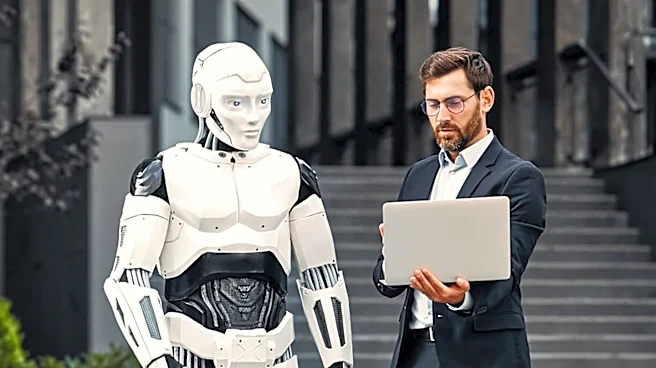
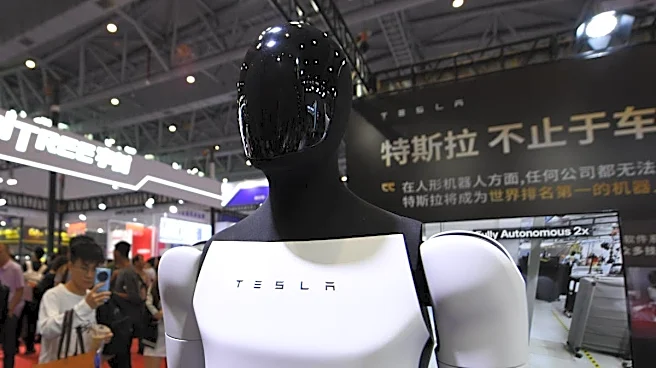
Tesla has announced its ambitious plan to mass-produce one million Optimus humanoid robots annually by 2027. This announcement marks a significant step in Tesla's expansion into the robotics industry, aiming to leverage its expertise in AI and automation.
The Optimus robot is designed to perform repetitive tasks, potentially transforming industries by addressing labor shortages and enhancing manufacturing efficiency. However, the success of this venture is contingent upon overcoming technical and operational challenges, as well as market adoption hurdles. Tesla's track record in delivering on bold timelines is mixed, with previous projects like Full Self-Driving experiencing delays.
Why It's Important?
The introduction of Optimus robots could have profound implications for various sectors, including manufacturing and logistics, by automating tasks traditionally performed by human workers. This move aligns with global trends towards increased automation, potentially reducing reliance on human labor and addressing labor shortages. For Tesla, success in this venture could solidify its position as a leader not only in electric vehicles but also in consumer-grade robotics. However, the widespread adoption of humanoid robots raises concerns about potential job displacement and economic inequalities, particularly in industries targeted for automation.
What's Next?
In the coming months, Tesla is expected to deploy Optimus prototypes within its factories to demonstrate real-world functionality. The company will need to address technical bottlenecks and consumer skepticism to achieve market adoption beyond its internal operations. Regulatory approval for the AI technology underpinning Optimus, particularly its Full Self-Driving AI, remains a critical hurdle. The next 6-12 months will be crucial for Tesla to prove the viability of Optimus as more than just a concept.
Beyond the Headlines
The deployment of humanoid robots like Optimus presents ethical and societal challenges, including the potential for job displacement and the need for regulatory frameworks to ensure safety and reliability. Tesla's reliance on its Full Self-Driving AI raises questions about scalability and regulatory approval, which are essential for widespread adoption. Additionally, the pricing and accessibility of Optimus robots will be key factors in determining their impact on the market.