




What's Happening?
The BOR arena’s ice rink in Barre, Vermont, is not expected to open for the upcoming skating season. This decision was announced by Barre City Manager Patrick Cushing on October 1, following tests that revealed numerous leaks in the rink's 52-year-old
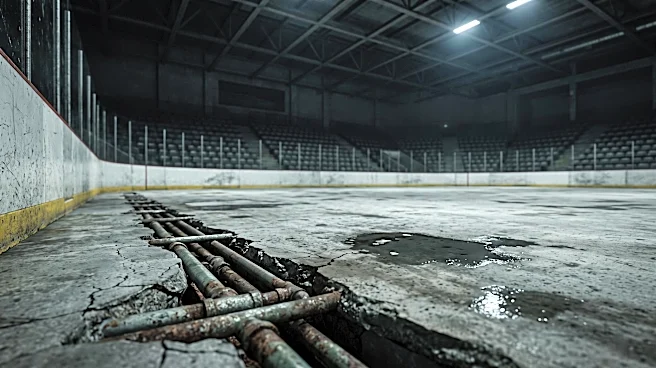
refrigeration system. Brad Oakes of Vermont Commercial Refrigeration, who has maintained the ice for decades, conducted the testing. The process uncovered 10 new leaks when water was used, and an additional 13 leaks were found on top of existing ones. A subsequent pressure test at 10 pounds per square inch, significantly lower than the normal operating pressure of 25 psi, produced three more leaks. At least two leaks are located within the concrete slab beneath the ice, making repairs complex and potentially requiring the capping of refrigeration lines, including one at center ice. Oakes advised against further patching, citing the risk of losing approximately $25,000 in coolant if another leak developed, and warned against high-pressure air flushing due to the risk of additional breaks.
Why It's Important?
The closure of the BOR ice rink has significant implications for the Barre community, particularly for local sports organizations, recreational users, and the economy. High school hockey teams, adult leagues, and figure skaters will be forced to find alternative ice time, which is already limited, potentially disrupting seasons and impacting participation. The closure also affects community events and public skating sessions, which serve as important social and recreational outlets for residents. Economically, the rink's closure could lead to a loss of revenue for the city and local businesses that benefit from increased activity around the arena. The estimated cost to replace the floor and refrigeration lines, ranging from $1.7 million to $2 million, highlights the substantial financial challenge facing the city. This situation underscores the broader issue of aging public infrastructure and the need for significant investment to maintain community facilities, especially those vital for local sports and recreation.
What's Next?
Barre city officials are currently exploring short-term and long-term solutions for the ice rink. In the immediate future, they are investigating the feasibility of rehabilitating the former outdoor rink at the north end of Barre for one season, though it may not meet the needs of competitive users. They are also looking into whether pipe-lining technology could be adapted for the BOR’s one-inch refrigeration pipes, acknowledging this would be an unconventional approach with unknown feasibility and long-term reliability. Longer term, the city plans to evaluate the condition of the entire facility, including the roof, insulation, and humidity controls, and identify potential funding sources for a comprehensive replacement or renovation project. Community partners and rink users are being notified to make alternative arrangements. The city manager anticipates anger, frustration, and sadness from the community, particularly from high school seniors who will miss their final season at their home rink.
Beyond the Headlines
The closure of the BOR ice rink extends beyond a simple facility issue; it touches upon the social fabric and community identity of Barre. For generations, the rink has served as a central hub for athletic development, social interaction, and community building. Its absence will create a void, impacting not only the physical activity levels of residents but also the sense of camaraderie and tradition associated with local ice sports. The situation also highlights the broader challenge faced by many smaller communities in maintaining and upgrading aging public infrastructure with limited resources. The emotional response anticipated by the city manager underscores the deep connection residents have to such facilities, revealing how recreational spaces contribute significantly to the quality of life and community spirit. This event may spark a broader conversation within Barre about prioritizing public amenities and securing funding for essential community assets.