




What's Happening?
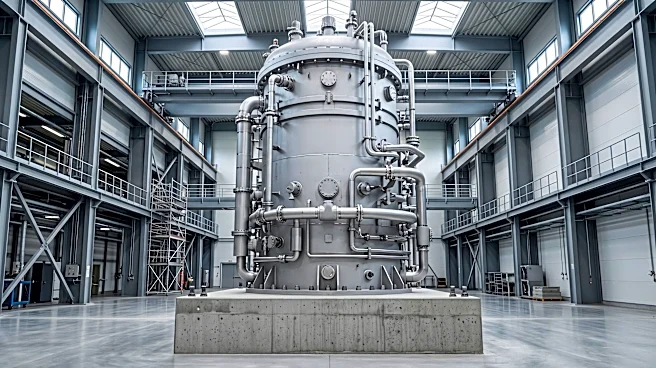
The small modular reactor (SMR) project being developed by GE Vernova Hitachi in Ontario, Canada, is experiencing significant delays and cost increases. According to Ontario Power Generation, the state-run utility managing the project, the initial 300-megawatt
unit is now expected to exceed its original budget and will likely miss its scheduled October 2030 operational date. The project's estimated cost was initially around $5.4 billion, with approximately $4.3 billion allocated for the primary unit. The delays are attributed to ongoing engineering adjustments for the pioneering SMR design and compounding supply chain disruptions. This setback comes at a challenging time for other firms developing next-generation nuclear technology, including U.S. companies like Oklo, X-Energy, and NuScale Power.
Why It's Important?
This development poses a significant challenge to the momentum of the modern nuclear power movement, particularly for the adoption of SMRs in North America. The ability to build next-generation reactors quickly and affordably is crucial for their widespread acceptance and deployment as a clean energy solution. Cost overruns and delays can deter potential investors and customers, including data centers that are increasingly looking to nuclear power for their energy needs. The project's cost of over $14,000 per kilowatt for the single unit significantly surpasses the approximately $2,500 per kilowatt for a new natural gas plant, highlighting the economic hurdles advanced nuclear projects face. This situation could impact the perceived viability and competitiveness of SMR technology in the broader energy market.
What's Next?
Ontario Power Generation and GE Vernova are committed to addressing the issues affecting the project, which include engineering, procurement, construction, evolving market conditions, inflation, and geopolitical risks. The companies will need to reassess timelines and budgets to bring the project to completion. The outcome of this project will be closely watched by other advanced nuclear technology developers and potential customers, as it could influence future investment and regulatory decisions for SMRs. The industry will need to demonstrate its ability to overcome these challenges to maintain confidence in the feasibility and economic competitiveness of next-generation nuclear power.
Beyond the Headlines
The delays and cost increases in the Ontario SMR project highlight the inherent complexities and risks associated with pioneering new nuclear technologies. While SMRs offer significant advantages in terms of modularity and potential for faster deployment, the 'first-of-a-kind' engineering challenges and supply chain vulnerabilities can lead to unforeseen obstacles. This situation underscores the need for robust project management, realistic cost estimations, and resilient supply chains in the advanced nuclear sector. It also raises questions about the role of government support and incentives in de-risking these innovative projects to ensure their successful commercialization. The broader implication is that while the demand for clean energy is growing, the path to widespread adoption of advanced nuclear power may be longer and more challenging than initially anticipated, requiring sustained commitment and strategic planning from all stakeholders.