






What's Happening?
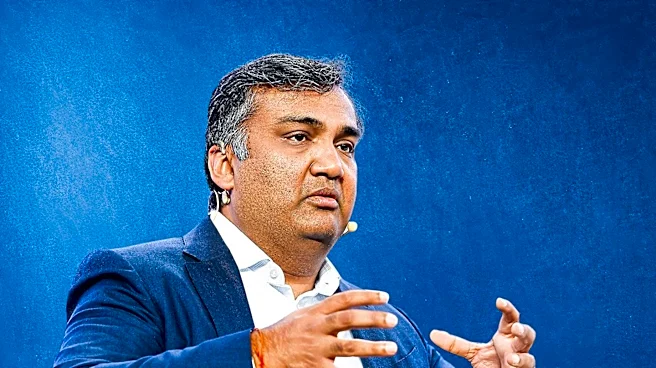
Michael Miebach, CEO of Mastercard, has characterized cybersecurity as an ongoing 'arms race' against cybercriminals, driven by the increasing sophistication of AI-enabled threats. With Mastercard processing 175 billion transactions annually, the company
faces significant challenges in defending against these evolving risks. Miebach emphasizes the critical need for heavy investment in AI defense mechanisms and advanced threat intelligence to combat these threats effectively. He also introduced the concept of 'Know Your Agent' (KYA) as AI agents begin to conduct transactions on behalf of users, paralleling the established 'Know Your Customer' (KYC) protocols. This new requirement aims to ensure the legitimacy and security of AI-driven transactions. Mastercard is actively developing tools like Verifiable Intent, in collaboration with Google, to address these emerging security needs, noting early signs of rapid adoption and momentum in this area. The discussion underscores the financial sector's proactive stance in adapting to a landscape increasingly shaped by artificial intelligence and its associated security implications.
Why It's Important?
The statements from Mastercard CEO Michael Miebach underscore a critical shift in the cybersecurity landscape, particularly for the U.S. financial industry. His 'arms race' analogy highlights the escalating nature of cyber threats, which are now being amplified by AI. This has profound implications for the security of financial transactions and consumer trust. The introduction of 'Know Your Agent' (KYA) signifies a proactive regulatory and technological adaptation to the rise of AI agents in commerce. This could set a new standard for digital transactions, impacting how businesses verify automated entities and potentially influencing future regulatory frameworks. For consumers, enhanced security measures like KYA could offer greater protection against fraud in an increasingly automated financial world. For financial institutions, it means significant investments in AI-driven defense systems and the development of new verification protocols, potentially leading to increased operational costs but also fostering greater resilience against cyberattacks. The collaboration with tech giants like Google on tools such as Verifiable Intent also points to a growing inter-industry effort to tackle these complex challenges.
What's Next?
In response to the escalating cyber threats and the emergence of AI agents, the financial sector, led by companies like Mastercard, is expected to accelerate the development and implementation of advanced AI-driven cybersecurity solutions. This will likely involve increased investment in machine learning for threat detection, anomaly identification, and automated response systems. The concept of 'Know Your Agent' (KYA) is poised to evolve further, potentially becoming a standard requirement for transactions involving AI agents. This could lead to the development of new industry protocols and regulatory guidelines for authenticating and monitoring AI entities in financial transactions. Collaboration between financial institutions, technology companies, and regulatory bodies is anticipated to intensify to establish robust frameworks for AI security and agent verification. Furthermore, as AI agents become more prevalent, there will be a continuous need for innovation in tools like Verifiable Intent to ensure secure and trustworthy automated transactions, shaping the future of digital commerce and financial security.
Beyond the Headlines
The emphasis on cybersecurity as an 'arms race' and the introduction of 'Know Your Agent' (KYA) by Mastercard CEO Michael Miebach signal a deeper transformation in the digital economy. Beyond immediate security concerns, these developments highlight the ethical and legal complexities arising from the increasing autonomy of AI agents in financial transactions. The need for KYA raises fundamental questions about accountability and liability when AI systems make financial decisions. Who is responsible if an AI agent commits fraud or makes an erroneous transaction? This could necessitate new legal frameworks and insurance models to address risks associated with AI autonomy. Culturally, the widespread adoption of AI agents and KYA could shift consumer expectations regarding digital trust and privacy, demanding greater transparency from companies about how AI agents operate and how personal data is handled. This evolution also underscores a broader societal challenge: ensuring that technological advancements in AI are matched by equally robust ethical guidelines and regulatory oversight to maintain trust and stability in an increasingly automated world.