


What's Happening?
Global energy markets are witnessing significant investments by energy giants in response to geopolitical fragmentation and increased insecurity in key maritime chokepoints. Abu Dhabi’s ADNOC investment arm, XRG, is reportedly considering acquiring up
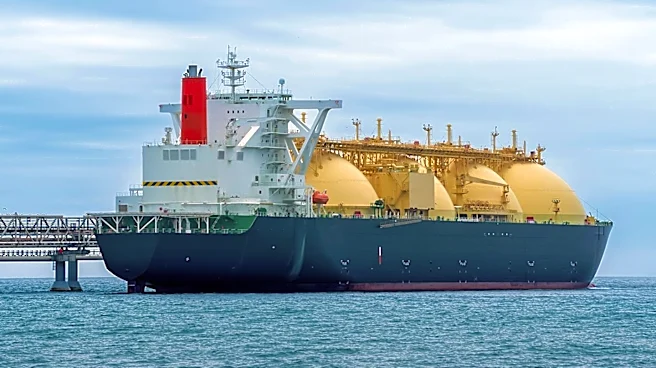
to 50% of Energos Infrastructure, a floating-LNG company valued at approximately $3 billion. Concurrently, shipowners have placed an unprecedented number of orders for Very Large Crude Carriers (VLCCs) in 2026, signaling a strategic bet on sustained long-distance oil trading. These developments indicate a global race to control physical energy flows through ownership of ships, terminals, and floating infrastructure. The focus is shifting from the energy transition to security of supply, as companies aim to enhance market resilience and adapt to redrawn energy trade routes. Energos Infrastructure operates 13 floating LNG assets, including floating storage and regasification units (FSRUs) and LNG carriers, deployed globally.
Why It's Important?
These massive investments underscore a fundamental shift in the global energy landscape, prioritizing supply security over previous investment tempos set by the energy transition. The acquisition of floating LNG infrastructure, such as FSRUs, offers rapid deployment and flexibility, enabling quicker responses to supply disruptions and enhancing energy security for importing nations. The surge in VLCC orders reflects an expectation of longer crude oil transportation routes, driven by geopolitical instability in regions like the Red Sea and the Strait of Hormuz. This means that even without increased oil consumption, tanker demand will rise as each barrel travels further. This strategic pivot by energy giants like ADNOC aims to build integrated gas positions across production, liquefaction, shipping, and market access, ensuring control over the entire energy supply chain in an increasingly fragmented world. The implications include potential oversupply in the shipping market if demand does not keep pace, and increased pricing power for shipyards.
What's Next?
Discussions regarding XRG's potential acquisition of Energos Infrastructure are still preliminary, but if finalized, it would significantly bolster ADNOC's global LNG portfolio and its control over downstream maritime infrastructure. The influx of new VLCCs, with deliveries extending towards 2030, will transform the crude tanker market, potentially leading to a freight-rate collapse between 2028 and 2030 if geopolitical tensions ease and effective vessel supply returns to normal. Shipowners are betting on a permanent era of longer routes and divided fleets, which will continue to drive demand for new vessels. The industrial consequences include increased pricing power for Chinese and South Korean shipyards and growing order backlogs for engine manufacturers and equipment suppliers. Policymakers and investors will closely monitor these developments for their impact on global energy prices, supply chain stability, and the overall resilience of energy markets.
Beyond the Headlines
The deeper implication of these investments is a recognition that geopolitical disruption is now a structural feature of the global energy market. Capital is being deployed on the assumption that energy trade will become less efficient, and physical transportation capacity will command a growing security premium. This represents a strategic reorientation where energy sovereignty extends beyond owning reserves to controlling the maritime systems through which energy molecules pass. The ethical dimension involves the potential for increased market concentration and control by a few large players, which could impact fair competition and access to energy for smaller nations. Legally, these large-scale acquisitions and fleet expansions will likely trigger increased scrutiny from antitrust regulators. Culturally, this shift reflects a global move towards self-reliance and resilience in energy supply, potentially leading to new alliances and trade patterns that prioritize security over pure economic efficiency.