





What's Happening?
BUTEC, in partnership with Waste-to-Energy (WtE) technology specialist Kanadevia Inova, has secured a significant Engineering, Procurement and Construction (EPC) contract for the Casablanca Waste-to-Energy Project. This project, located northwest of the Mediouna
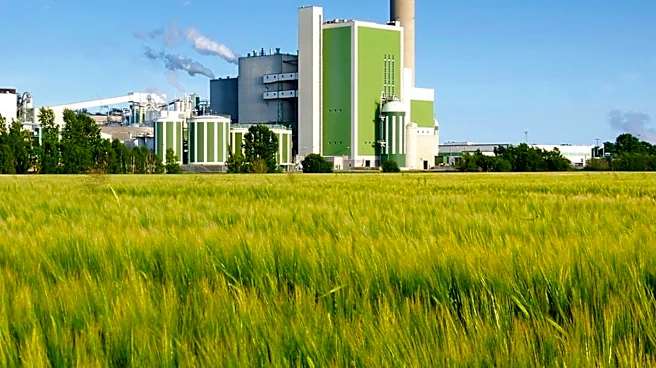
landfill in the Casablanca-Settat region of Morocco, aims to process approximately 1.5 million tonnes of non-recyclable waste annually. The initiative is a collaborative effort with a consortium comprising Nareva, Kanadevia Inova, and Itochu Corporation, operating under a 33.5-year concession agreement with the Municipality of Casablanca. The facility is designed to reduce reliance on landfills, prevent up to 1.0 tonne of CO2-equivalent emissions per tonne of waste, and generate 126 MWe of baseload electricity. BUTEC will be responsible for civil works, engineering, procurement, and construction of non-process buildings, facilities, and associated infrastructure, including mechanical, electrical, and plumbing works. Kanadevia Inova will handle the technology and process aspects of the EPC works, as well as operations support, long-term maintenance, and financing.
Why It's Important?
This project represents a crucial step in Casablanca's transition towards a more sustainable and circular approach to waste management, serving over 4.2 million people in Greater Casablanca. By converting waste into energy, the facility will significantly reduce landfill dependency and contribute to Morocco's broader energy transition and long-term decarbonization goals. The reduction of CO2-equivalent emissions by up to 1.0 tonne per tonne of waste processed highlights the environmental benefits and the potential for mitigating climate change impacts. For BUTEC, this contract reinforces its position as a leading EPC contractor in the strategic waste-to-energy sector, demonstrating its multidisciplinary engineering expertise and strong local execution capabilities. The collaboration with a global leader like Kanadevia Inova also showcases the importance of international partnerships in addressing complex environmental and energy challenges, setting a precedent for similar projects in other developing regions.
What's Next?
The Casablanca Waste-to-Energy Project is expected to proceed with the construction phase, with BUTEC undertaking the civil works and infrastructure development, and Kanadevia Inova focusing on the technological and process implementation. Upon completion, the facility will commence operations, significantly impacting waste management practices and energy generation in the Greater Casablanca area. The success of this project could serve as a model for other regions in Africa and the Middle East looking to adopt sustainable waste management and energy recovery solutions. Continued monitoring of the project's environmental impact, particularly its CO2 emission reductions and electricity generation, will be crucial. The long-term concession agreement suggests a sustained commitment to these sustainable practices, potentially leading to further investments in similar infrastructure projects across Morocco and beyond.
Beyond the Headlines
The Casablanca Waste-to-Energy Project underscores a growing global trend towards integrating waste management with renewable energy generation, moving beyond traditional landfill reliance. This initiative highlights the ethical imperative of addressing waste accumulation and its environmental consequences, particularly in densely populated urban areas. From a legal perspective, the 33.5-year concession agreement signifies a long-term commitment and a robust regulatory framework supporting such large-scale infrastructure projects. Culturally, the project could foster a greater awareness and acceptance of waste-to-energy technologies among the public, shifting perceptions of waste from a burden to a valuable resource. This development also reflects a broader economic shift towards green technologies and sustainable development, creating new job opportunities and stimulating local economies through specialized engineering and construction work. The project's success could influence policy-making in other nations, encouraging similar investments in sustainable infrastructure.