






What's Happening?
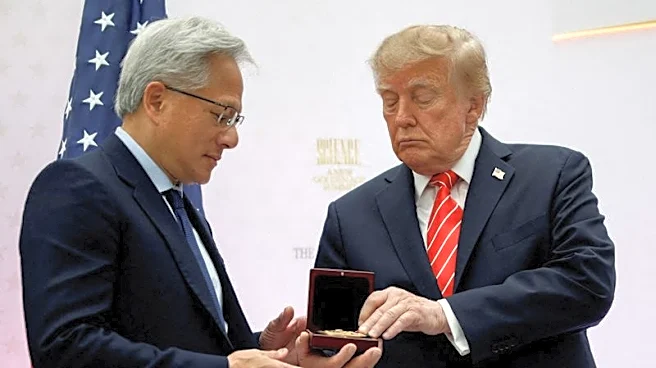
Jensen Huang, the co-founder and long-time CEO of Nvidia, admitted to infidelity on November 8, stating, “I take full responsibility.” He subsequently resigned from his position as Nvidia CEO on November 12. While Huang did not publicly name the individual
involved, Reuters, citing sources familiar with the matter and internal correspondence, reported that he had an affair with Chinese businesswoman Alice Huang, also known as Huang Le. This situation has been further complicated by allegations from U.S. intelligence officials, who reportedly believe Alice Huang acted on behalf of Chinese intelligence. Beijing has denied these allegations, which Reuters has not independently verified. Alice Huang has not yet made any public statements regarding the alleged affair or the espionage accusations. The incident has sparked widespread discussion in both the United States and China, particularly concerning gender dynamics in the workplace and the espionage angle.
Why It's Important?
The resignation of a prominent CEO like Jensen Huang due to personal conduct, coupled with serious allegations of espionage, carries significant implications for corporate governance, national security, and public perception. For Nvidia, a leading technology company, the departure of its long-standing leader could introduce uncertainty regarding future leadership and strategic direction. The alleged involvement of Chinese intelligence in a relationship with a U.S. tech executive raises critical national security concerns, highlighting potential vulnerabilities within corporate leadership to foreign influence and espionage. This incident could prompt increased scrutiny of executives' personal lives, particularly those in sensitive industries, and lead to enhanced security protocols within U.S. corporations. Furthermore, the public discourse surrounding the event has brought to light controversial perspectives on gender dynamics and workplace ethics, reflecting broader societal issues regarding accountability and gender bias.
What's Next?
The immediate future for Nvidia will involve navigating the transition to new leadership and addressing any potential fallout from the scandal, both internally and externally. The company will likely focus on reassuring investors and stakeholders about its stability and continued innovation. From a national security perspective, U.S. intelligence agencies may continue their investigations into the alleged espionage, which could lead to further actions or policy adjustments regarding foreign influence in critical technology sectors. The allegations against Alice Huang, if substantiated, could strain U.S.-China relations further, particularly in the technology and intelligence domains. Public and media attention will likely remain on any developments from Alice Huang, should she choose to comment, and on the broader implications for corporate security and executive conduct in the tech industry.
Beyond the Headlines
Beyond the immediate corporate and national security implications, this event delves into deeper societal issues, particularly concerning gender bias and the objectification of women in professional contexts. The public and social media reactions, especially in China, have revealed problematic narratives that normalize infidelity for powerful men and question the professional legitimacy of women based on their perceived attractiveness or relationships. This incident underscores the persistent challenges women face in the workplace, where their careers can be unfairly scrutinized through a sexualized lens, and where they may be subjected to harassment and reputational damage. The case highlights the ethical complexities of personal conduct intersecting with professional responsibilities, especially when national security interests are involved, and calls for a critical examination of how society perceives and judges individuals, particularly women, in high-profile scandals.