




What's Happening?
Greenland Technologies Holding Corporation, a developer and manufacturer of transmission and drivetrain systems for material-handling machinery and industrial vehicles, has announced its expansion into the robotics market. The company plans to introduce
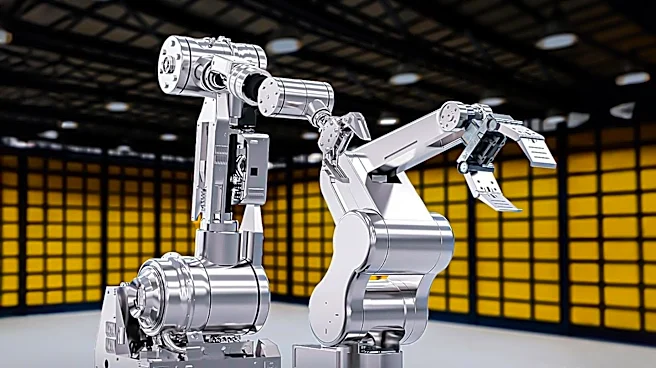
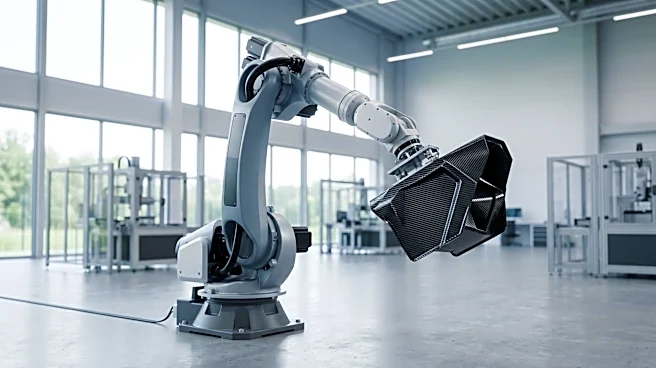
new product lines focusing on precision components for robot manufacturers and mobile platforms for inspection and patrol robots. This strategic move leverages Greenland's existing research and development expertise, precision-manufacturing capabilities, and production capacity. The initiative builds upon Greenland's prior engagement and investment in automated guided vehicles (AGVs) since 2019, with the engineering knowledge and platform designs from AGV development expected to support the creation of inspection and patrol robot platforms. Greenland intends to supply critical components to robotics companies globally and evaluate applications where its drivetrain and vehicle-platform experience can be applied to mobile robotic systems. The company's Chairman of the Board of Directors, Peter Wang, stated that this expansion is a natural extension of Greenland's capabilities, driven by demand from robot manufacturers.
Why It's Important?
This expansion by Greenland Technologies into the robotics market signifies a strategic pivot that could have notable implications for the industrial automation sector and the company's market position. By diversifying its product portfolio beyond traditional material-handling and industrial vehicle systems, Greenland aims to tap into the rapidly growing robotics industry. This move could enhance the company's revenue streams and market share by addressing the increasing demand for specialized components and platforms in robotics. For the broader U.S. industrial landscape, increased competition and innovation in the supply chain for robotics could lead to more advanced and cost-effective automation solutions. This could benefit various industries that rely on robotics for efficiency, safety, and data collection, such as manufacturing, logistics, and infrastructure inspection. The company's ability to leverage its existing manufacturing infrastructure for this expansion also highlights a trend of established industrial players adapting to emerging technological demands, potentially fostering a more robust domestic supply chain for robotics components.
What's Next?
Greenland Technologies will proceed with assessing specific configurations and market opportunities as its robotics initiative advances. The company plans to continue evaluating applications where its drivetrain and vehicle-platform experience can support mobile robotic systems. This will involve further research and development to adapt its existing expertise to the unique requirements of robotics. Potential next steps include securing partnerships with robot manufacturers to supply precision components and developing prototypes for inspection and patrol robots. The success of this expansion will depend on Greenland's ability to effectively integrate its current capabilities with the demands of the robotics market, including navigating competitive landscapes and technological advancements. The company will likely focus on a disciplined approach to this expansion, leveraging its existing production resources and capabilities to ensure a smooth transition and successful market entry.
Beyond the Headlines
Greenland Technologies' entry into the robotics market reflects a broader industrial trend towards automation and smart manufacturing. This move could accelerate the adoption of robotic solutions in various sectors, potentially leading to increased operational efficiency and safety in industrial environments. The development of more sophisticated inspection and patrol robots, enabled by companies like Greenland, could have significant implications for infrastructure maintenance, security, and data collection in hazardous or remote locations. Ethically, the increased deployment of autonomous robots raises questions about job displacement and the future of human labor, though it also presents opportunities for new job creation in robot development, maintenance, and oversight. From a technological standpoint, Greenland's focus on precision components and mobile platforms underscores the critical role of specialized hardware in advancing robotic capabilities, highlighting the ongoing convergence of traditional industrial manufacturing with cutting-edge automation technologies. This strategic shift could position Greenland as a key player in the evolving landscape of industrial automation.