




What's Happening?
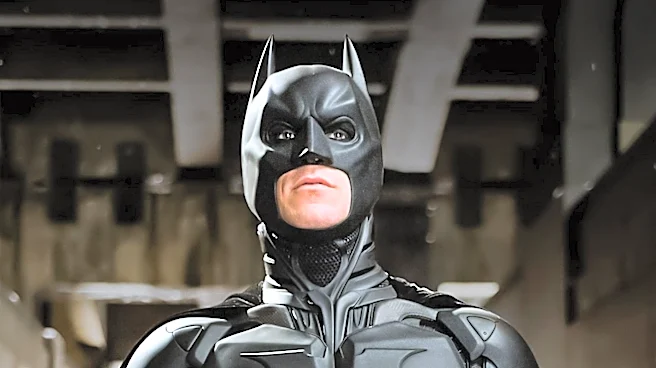
The DC Universe (DCU) has confirmed the existence of Batman within its continuity, distinct from Robert Pattinson's portrayal in Matt Reeves' 'The Batman' franchise. While Pattinson is set to reprise his role in 'The Batman - Part II' in February 2028,
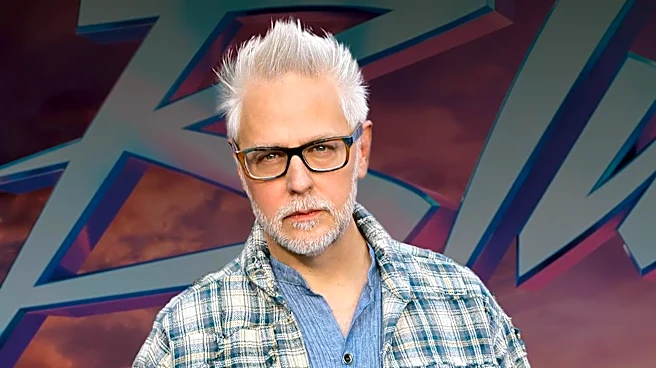
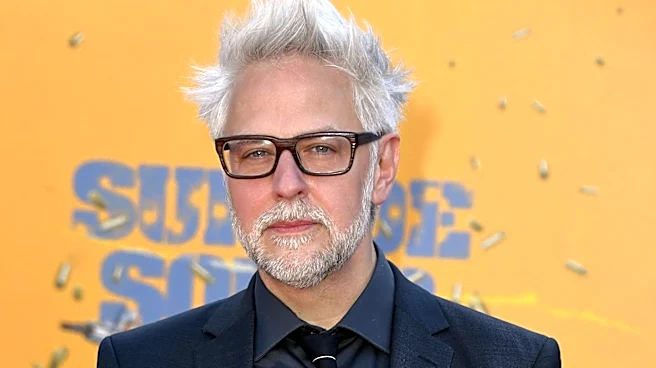
DCU co-CEO James Gunn and Peter Safran are developing a new version of the Dark Knight for 'Batman: The Brave and the Bold,' which is expected to be released no earlier than 2029. This new DCU Batman has made a silhouetted appearance in 'Creature Commandos Season 1' and received mentions in the 'Lanterns' series. Safran also confirmed Batman's presence in the 'Clayface' movie, despite no direct appearance. Gunn has indicated that the DCU Batman will be roughly the same age as David Corenswet's Superman, placing him in his early to mid-30s, and the 'The Brave and the Bold' film is heavily inspired by Grant Morrison's Batman comics, potentially introducing Bruce Wayne's son, Damian.
Why It's Important?
This development signifies a strategic move by DC Studios to establish a cohesive cinematic universe while simultaneously allowing for separate, successful franchises. The decision to maintain two distinct live-action Batmen could impact audience perception and market saturation, potentially leading to confusion or, conversely, catering to diverse fan preferences. For the entertainment industry, it highlights a trend of managing multiple iterations of popular characters, a challenge that requires careful narrative planning and marketing. The introduction of a younger Batman in the DCU, potentially with Damian Wayne, suggests a long-term vision for the character's evolution within the new universe, aiming to explore different facets of his mythology. This approach could influence future franchise strategies across the superhero genre, as studios balance continuity with creative freedom.
What's Next?
Fans can anticipate the continued development of 'Batman: The Brave and the Bold,' with casting announcements for the new DCU Batman expected in the future. The film's release is projected for 2029 or later, following 'The Batman - Part II' in 2028. The ongoing 'Lanterns' series and future DCU projects are likely to offer more clues and references to the DCU's Batman, gradually building his presence before his solo film. The question of whether the two versions of Batman will continue to coexist indefinitely or if Reeves' 'The Batman Epic Crime Saga' will conclude remains to be seen. Additionally, the status of the Joker within the DCU is still unconfirmed, which will be a significant factor in Harley Quinn's narrative and the broader Gotham City landscape.
Beyond the Headlines
The strategic decision to run two parallel Batman universes raises interesting questions about intellectual property management and audience engagement in a saturated superhero market. It reflects a broader industry trend where beloved characters are reinterpreted across different platforms and continuities, challenging traditional notions of canon. This approach could lead to a more diverse range of storytelling, but also risks fragmenting the fanbase. The emphasis on Grant Morrison's comics for the DCU Batman suggests a deeper dive into complex character dynamics, particularly with the potential introduction of Damian Wayne, which could explore themes of fatherhood, legacy, and moral ambiguity within the superhero narrative. This dual-universe strategy could set a precedent for how major studios handle their most valuable franchises in the coming years.