





What's Happening?
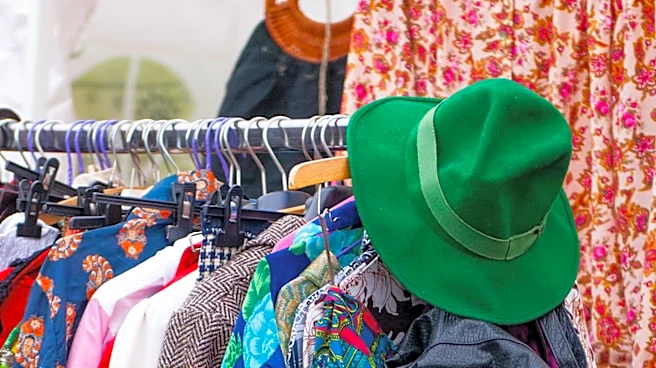
The UK vintage clothing market is experiencing significant growth, driven by a resurgence in Y2K fashion trends. This revival includes styles from the late 1990s and early 2000s, such as velour tracksuits, low-rise jeans, and logo accessories. The market,
once considered niche, now influences mainstream fashion, with many consumers seeking genuine early-2000s garments. The trend combines vintage pieces with contemporary basics, creating a modern, wearable look. London remains a key destination for vintage shopping, but the market has expanded beyond specialist boutiques to include charity shops, online marketplaces, and social media sellers.
Why It's Important?
The growth of the vintage clothing market reflects broader shifts in consumer behavior towards sustainability and individuality. As shoppers increasingly value unique designs and sustainable fashion choices, the demand for vintage clothing rises. This trend supports a slower fashion cycle, reducing waste and promoting the reuse of existing garments. The market's expansion also highlights the role of digital platforms in making vintage fashion more accessible, connecting buyers and sellers globally. The popularity of Y2K fashion underscores the cyclical nature of fashion trends and the enduring appeal of past styles.
What's Next?
The vintage clothing market is likely to continue growing, with online platforms playing a crucial role in its expansion. As consumers become more environmentally conscious, the demand for sustainable fashion options, including vintage clothing, is expected to rise. The market may also see increased competition among sellers, driving innovation in sourcing and marketing strategies. Additionally, the integration of technology, such as authentication services for luxury resale, could enhance buyer confidence and market credibility.
Beyond the Headlines
The vintage clothing market's growth raises questions about the sustainability of second-hand shopping. While buying pre-owned garments reduces demand for new production, overconsumption of vintage items can still contribute to environmental issues. Consumers are encouraged to make thoughtful purchases, focusing on quality and longevity rather than quantity. The market's expansion also highlights the cultural significance of fashion as a form of personal expression and historical preservation.