







What's Happening?
Chuck Lorre, co-creator of 'Two and a Half Men,' has disclosed in his memoir 'Sitcom' the significant efforts made to cast Hugh Grant as Charlie Sheen's replacement in 2011. Following Sheen's tumultuous departure, CBS and Warner Bros. were prepared to offer
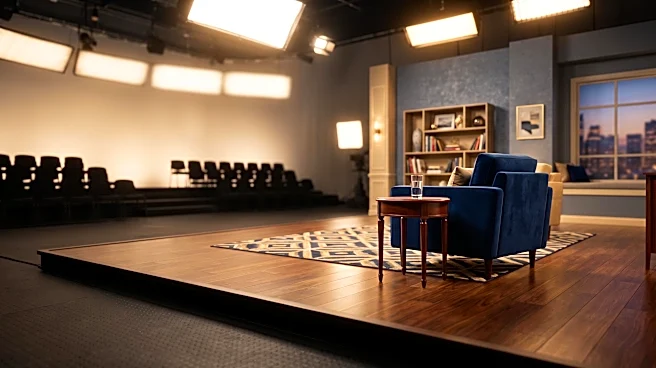
Grant $750,000 per episode and a reduced four-day work week. More remarkably, they were willing to fundamentally alter the show's production by eliminating the live studio audience, a core element of the sitcom, and instead use canned laughter. This concession was made due to Grant's reported discomfort with performing in front of a live audience. Lorre recounts that he and his writing partner, Lee Aronsohn, developed specific scenes tailored to Grant's comedic style and believed he was on the verge of signing the contract. However, Grant ultimately declined the role, leading to Ashton Kutcher being cast as Walden Schmidt.
Why It's Important?
This revelation highlights the immense pressure and financial stakes involved in maintaining a successful television franchise, particularly after the unexpected exit of a lead actor. The willingness of CBS and Warner Bros. to offer such substantial financial incentives and, more critically, to compromise the show's established format by removing the live audience, underscores the perceived value of 'Two and a Half Men' and the desire to secure a high-profile replacement. The decision to consider abandoning a live audience, a hallmark of traditional sitcoms, reflects a pragmatic approach to talent acquisition in the entertainment industry, prioritizing star power over established production norms. This situation also sheds light on the differing perspectives between creators and actors regarding creative control and the development process, as Grant's previous statements indicated a lack of a concrete script as a reason for his refusal.
What's Next?
While the events described are historical, Lorre's memoir provides new context to a pivotal moment in television history. The insights offered could influence future negotiations and production decisions in the entertainment industry, particularly when faced with similar casting challenges or the need to adapt to evolving talent demands. The discussion around the value of live audiences versus canned laughter might also resurface in contemporary television production, especially as streaming platforms and diverse content formats continue to challenge traditional broadcasting models. The differing accounts from Lorre and Grant regarding the reasons for the refusal could also spark further public discussion and analysis among fans and industry observers.
Beyond the Headlines
The willingness to sacrifice a live studio audience for a star like Hugh Grant reveals a deeper tension within the entertainment industry: the balance between artistic integrity and commercial viability. The immediate, authentic reactions of a live audience are often considered integral to the comedic timing and energy of a sitcom. By contemplating their removal, the producers were effectively prioritizing the marketability of a major star over a fundamental aspect of the show's creative identity. Lorre's self-critical reflection on his willingness to make such a compromise—stating, "Fuck it. Clearly I had no moral compass"—underscores the ethical dilemmas faced by creators under immense commercial pressure. This incident serves as a case study in how the pursuit of star power can lead to significant shifts in production philosophy and potentially alter the very essence of a creative work.