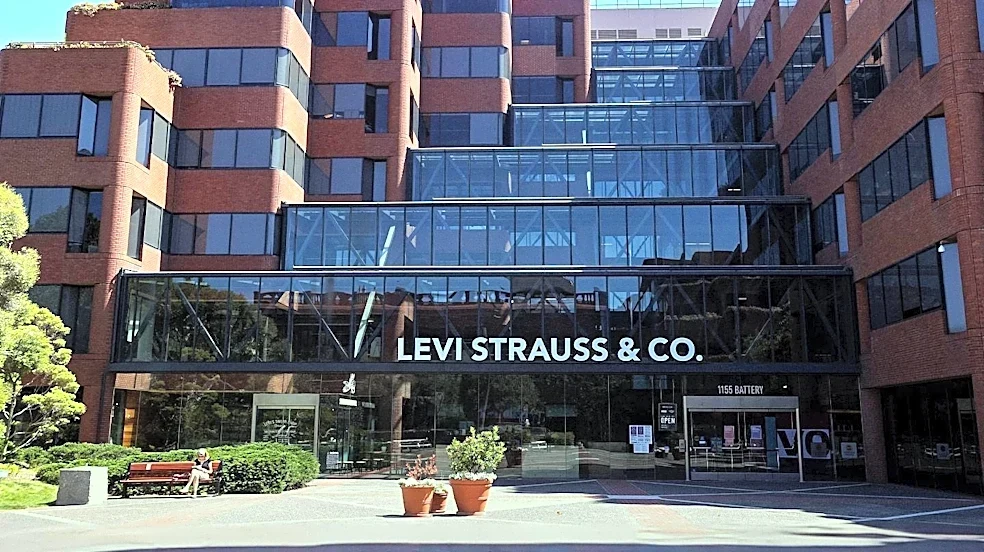








What's Happening?
Levi Strauss & Co. (NYSE:LEVI) has announced robust third-quarter results, with revenues reaching $1.61 billion, marking a 4.3% increase year-over-year. This revenue figure aligned with analysts' expectations. The company also surpassed analyst estimates
for both earnings per share (EPS) and adjusted operating income. Michelle Gass, President and CEO of Levi Strauss & Co., attributed this strong performance to the company's diversified portfolio, highlighting significant growth in its international and wholesale businesses, as well as continued momentum in its lifestyle categories. While the direct-to-consumer (DTC) business did not meet internal projections, the company has taken swift action to address this shortfall and anticipates mid-single-digit growth for DTC in the fourth quarter, driven by accelerating trends as the holiday season approaches. Levi Strauss & Co., founded in 1853 and headquartered in San Francisco, California, is renowned for inventing the first pair of blue jeans in 1873 and continues to be a prominent apparel company known for its iconic denim products and classic American style.
Why It's Important?
Levi Strauss & Co.'s strong Q3 performance is significant for the consumer discretionary sector, demonstrating resilience and effective strategic execution in a dynamic market. The company's ability to exceed EPS and adjusted operating income estimates, alongside meeting revenue expectations, signals healthy operational management and brand strength. The growth in international and wholesale segments indicates successful market penetration and diversified revenue streams, reducing reliance on any single market or channel. The acknowledgment and proactive measures taken to address the underperformance in the direct-to-consumer business highlight a responsive leadership team, crucial for adapting to evolving consumer purchasing habits. This performance could instill investor confidence in the apparel industry, particularly for established brands that can leverage their heritage while innovating. For consumers, the continued momentum in lifestyle categories suggests that Levi's is successfully expanding its product offerings beyond traditional denim, catering to broader fashion trends and preferences. The anticipated recovery of the DTC business in Q4 is particularly important as it coincides with the critical holiday shopping season, which can significantly impact annual financial results.
What's Next?
Following its strong Q3 results, Levi Strauss & Co. will focus on sustaining the momentum in its international and wholesale businesses while diligently working to revitalize its direct-to-consumer (DTC) segment. The company expects its DTC business to achieve mid-single-digit growth in the fourth quarter, a crucial period leading into the holiday season. This anticipated growth will be a key indicator of the effectiveness of the measures taken to address previous shortfalls. Investors and analysts will closely monitor the Q4 earnings report for confirmation of this DTC recovery and overall financial health. The company will likely continue to invest in its diversified portfolio and lifestyle categories, aiming to capitalize on current market trends and consumer demand. Furthermore, Levi Strauss & Co. will need to maintain its competitive edge in the apparel market, which is characterized by rapid changes in fashion and consumer preferences. The company's ability to adapt its product lines and sales strategies will be critical for long-term success and continued growth.
Beyond the Headlines
Beyond the immediate financial figures, Levi Strauss & Co.'s performance reflects broader trends within the retail and apparel industries. The emphasis on a 'diversified portfolio' and 'lifestyle categories' indicates a strategic shift from being solely a denim brand to a more comprehensive fashion and lifestyle provider. This diversification is a common strategy for legacy brands seeking to remain relevant and capture a wider consumer base in a competitive market. The challenges faced by the direct-to-consumer business, despite overall positive results, underscore the complexities of modern retail, where online presence and direct customer engagement are increasingly vital but also highly competitive. The company's proactive response to the DTC shortfall highlights the importance of agile business models and data-driven decision-making in today's fast-paced retail environment. Furthermore, the continued success of a brand established in 1853 speaks to the enduring power of brand heritage and quality in an industry often dominated by fleeting trends. This blend of tradition and adaptation will be crucial for Levi Strauss & Co.'s sustained relevance and growth in the coming years.